
Hinterland Weddings
Lighting a Byron Bay hinterland wedding, properly
Barns, tipis, paddocks and hall venues in the hinterland are beautiful for exactly the reason they're hard to light: there's nothing there. This guide covers how we plan power, rigging and timing for hinterland weddings, written by the crew that delivers, installs and packs down the lighting ourselves.
Why It's Different
The hinterland goes properly dark, and that's the opportunity
Light a reception venue in Surfers Paradise and you're competing with street lights, apartment towers and passing headlights. Light a paddock outside Bangalow and you're working with genuine darkness. Once the sun drops behind the ridge, the only light at your wedding is the light you brought. That sounds like a problem, and for an unprepared couple it is. For a lighting crew it's the best canvas there is.
Because there's no ambient light to fight, hinterland installs need far less output than city venues to look spectacular. A single 60 metre festoon run at warm white 2700K reads as a glowing golden room against a black sky, where the same run in an urban courtyard would just blend in. The flip side is that there's no forgiveness either. If the path from the reception to the toilets isn't lit, guests are walking it by phone torch. If the caterer's marquee has no light, dinner service struggles. Hinterland lighting is one part romance, one part practical coverage, and a good plan handles both.
We've been installing event lighting across the Northern Rivers and Gold Coast hinterland for over 10 years, and the venues that look effortless in photos are the ones where the boring questions were answered early: where does power come from, what can we rig to, and what time does it actually get dark on your date. Our Byron Bay wedding lighting page covers the service itself; this guide covers the thinking behind it.
Venue Types
Barns, tipis, halls and open paddocks each want a different approach
Hinterland venues fall into four rough types, and the right lighting plan is different for each. Telling us which one you're working with is the single most useful thing you can put in an enquiry.
- Barns and sheds: exposed beams are a gift — they give us solid overhead rigging points for festoon runs, fairy-light canopies and pendants without any extra structure. The catch is that many heritage barns have limited or aged power, so we plan circuits carefully. Our barn wedding lighting page goes deeper on this style.
- Tipis and marquees: the structure itself defines the rig. We work with the tipi or marquee supplier's rated attachment points rather than piercing canvas, and we favour low-heat LED throughout because fabric and hot fixtures don't mix.
- Hall and community venues: older halls often forbid fixing anything to walls or ceilings, so we bring freestanding solutions and use uplighting to transform tired interiors without touching the building.
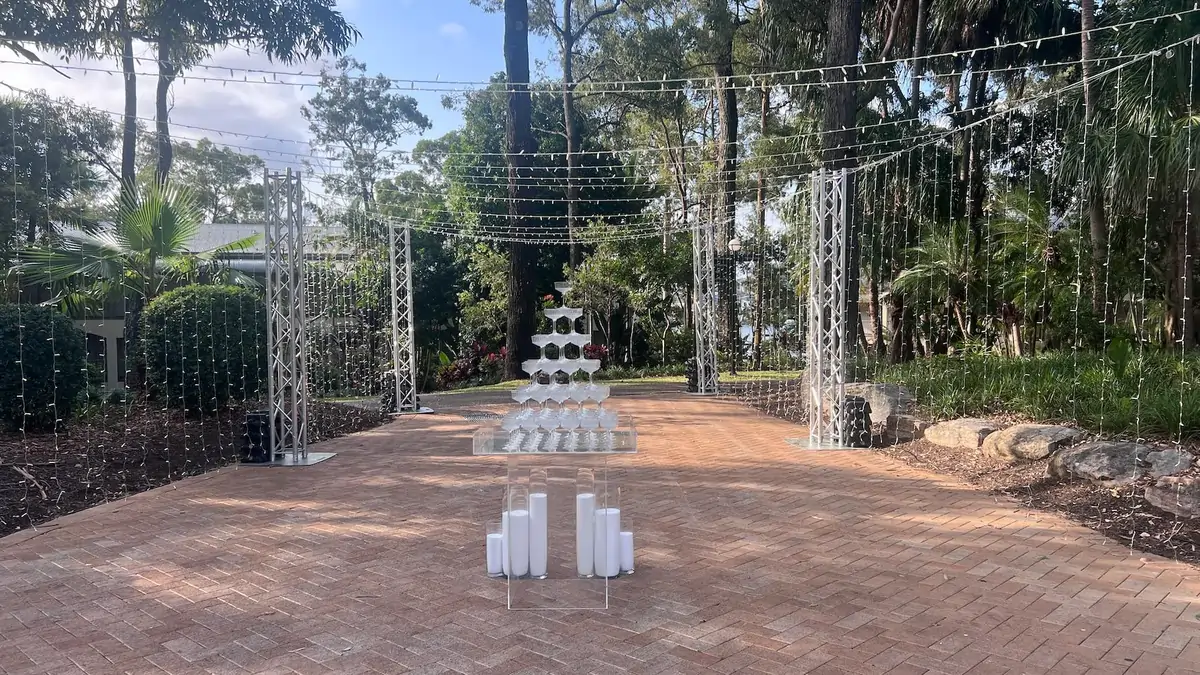
- Open paddocks and gardens: no structure at all, which means we bring the structure — weighted freestanding poles, tensioned catenary wire between them, and tree canopies where mature trees allow. See garden wedding lighting for how this looks in practice.
Every one of these can look extraordinary. The mistake is assuming a plan that worked at a friend's barn wedding will transfer to your paddock — the rigging, power and quantities all change. When you enquire, tell us the venue type in the first line and attach a few photos of the space; that alone usually cuts a full round of back-and-forth out of the quoting process.
No Fixed Rigging
How we hang lighting when there's nothing to hang it from
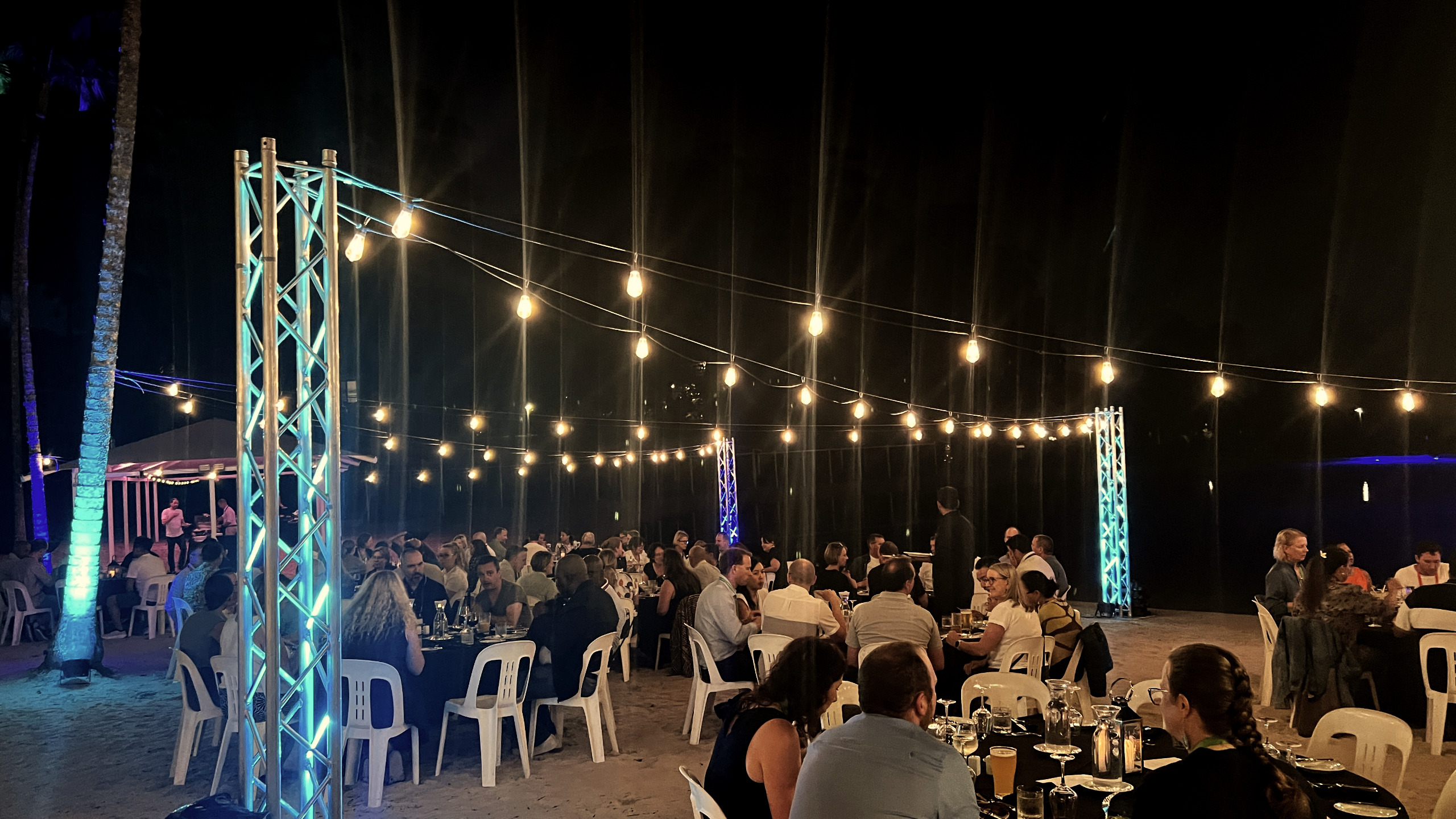
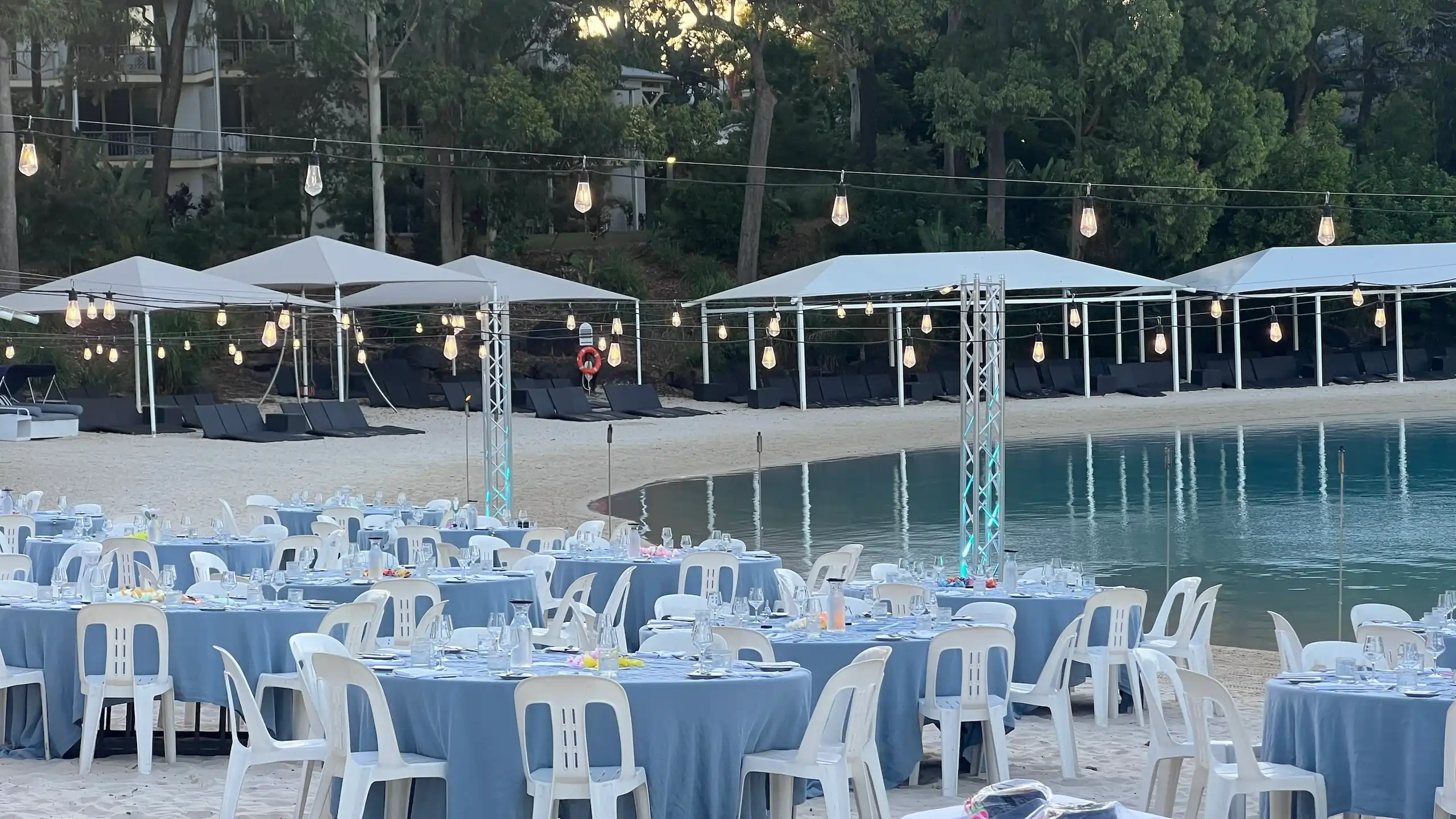
The most common hinterland question we get is some version of "there's literally nothing there — can you still do festoon over the dining area?" Yes, and it's routine for us. When a site has no beams, posts or usable trees, we install freestanding poles on weighted bases, then run tensioned catenary wire between them. The festoon or fairy strings attach to that wire, not to the pole tips, which keeps the runs straight, controls the sag and takes the load off the lighting cable itself.
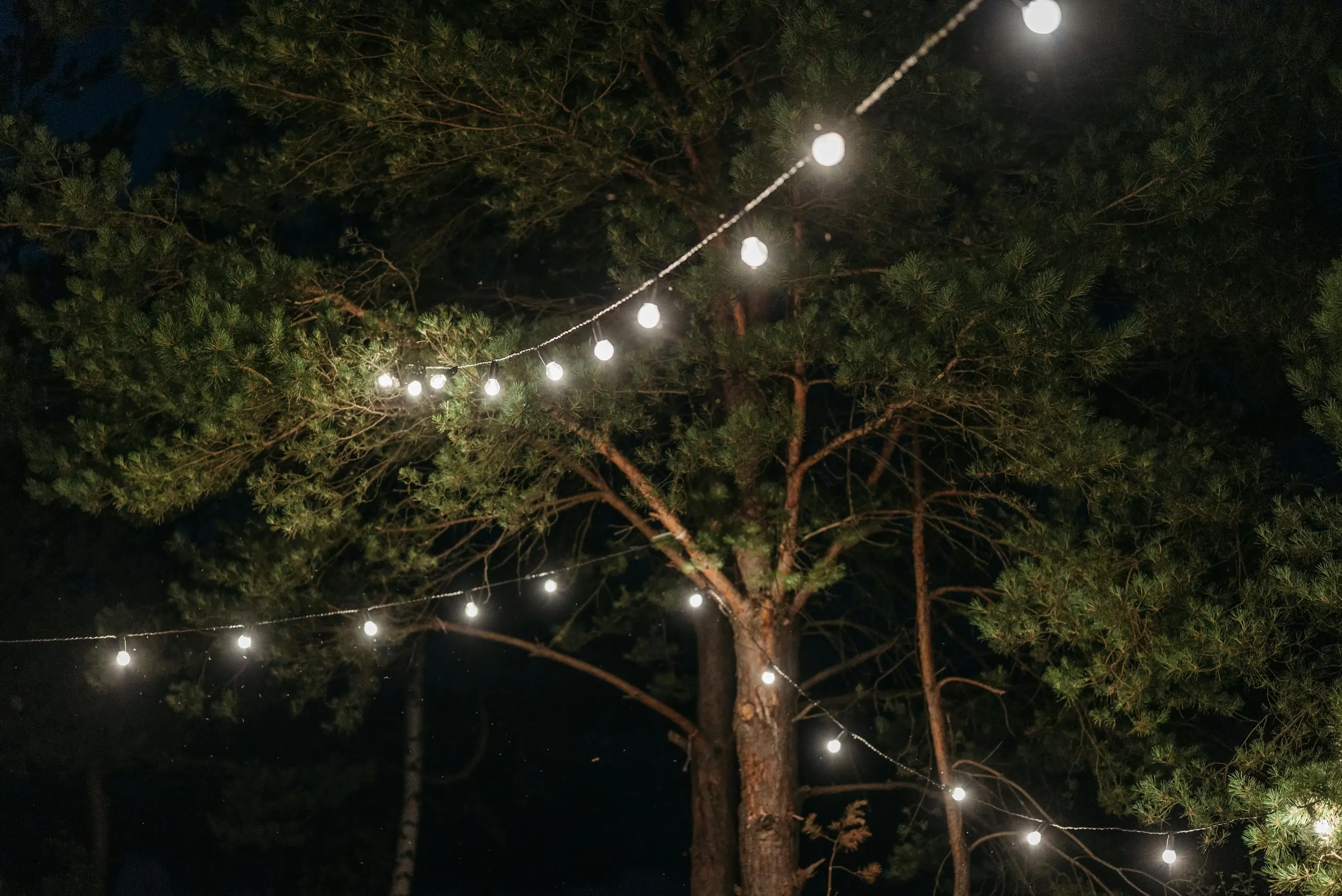
Where trees do exist, we use them — a canopy strung through mature figs or camphor laurels is one of the signature hinterland looks, and our outdoor tree lighting installs never screw into or damage the tree. Raised beams are the other tool in the kit: at 3 metres for $200, they lift a festoon run over a dance floor or walkway so nobody is ducking under cable, which matters more than couples expect once the dancing starts.
Everything overhead is a working-at-heights job carrying weight above your guests, so this is the part we'd genuinely ask you not to DIY. Every fixture we hang is tested and tagged, the rigging is rated for the load, and the install is done by the same crew that quoted it. If your site is unusual — steep, exposed, or a long carry from vehicle access — mention it via our contact page and we'll factor it into the plan rather than discover it on the day.
A note on ground conditions, because the hinterland has opinions about them. Weighted bases need reasonably level, firm ground; a paddock that was mowed last week and a paddock that flooded last month are different sites. If your reception area slopes, tell us roughly how much — we can level bases and stagger pole heights so the light line stays even across a slope, but we plan that in advance. Photos of the actual spot, taken from where the head table will sit, are worth more to us than any written description.
Power
Paddock power: generators, circuits and the 50 metre rule
Power is where hinterland weddings most often go wrong, and it's almost never the lighting that trips things — it's everything sharing the same circuit. A farmhouse circuit that happily runs a festoon canopy will drop out the moment the caterer's urn, the coffee machine and the band's amp pile onto it too. So we plan lighting power separately from catering and entertainment power, every time.
The good news is that modern LED festoon draws very little. Our festoon runs at 20 watts per 5 metre string, so even a large 200 metre install draws less than most kitchen kettles. The constraint isn't total draw, it's distribution: we run a maximum of 50 metres of festoon per power source, so a big canopy is fed from multiple points rather than one long daisy chain. That's a hard rule of ours, because overloaded single runs are how dim, uneven and unsafe installs happen.
- Property power: fine for most installs if we can confirm which circuits are free. We ask about this at quoting, not on the day.
- Generator power: standard for true paddock sites. LED lighting is an easy generator load, and we position and cable so the generator is out of earshot of the tables.
- Dimming: a dimmable controller at $145 lets you pull the whole room down for speeches and first dance — a small line item that makes a big difference to how the night feels.
All our festoon is IP65 rated, so hinterland weather — dew, mist, a passing shower — doesn't threaten the install or your guests.
Timing
Plan the run sheet around sunset, not the other way round
Hinterland sunset behaves differently to the coast. Ridge lines put valleys in shadow well before official sunset, and once the sun goes, the dark arrives fast — there's no city glow easing the transition. A June wedding near Federal can be effectively dark by 5:15pm, while a late-December date holds usable light until close to 8pm. Look up sunset for your specific date early, then subtract 20 to 30 minutes for surrounding hills, and build the run sheet from there.
The moments that depend on it: if you want golden-hour portraits, your photographer needs you free in the 45 minutes before that adjusted sunset, which usually means canapés and lighting-on happen while you're away. If your ceremony is late afternoon in the cooler months, the walk back to the reception may already need lit pathways. And the reveal moment — guests walking into a fully lit reception at dusk — only works if everything is installed, tested and switched on before the sun goes, not while it's going.
That's why we install well ahead of guests. A typical install takes 2 to 3 hours, and for most weddings we're on site in the morning or early afternoon, finished and tested long before anyone arrives. Packdown happens after the event, usually the next morning, so nobody in your family is coiling cables at midnight. If your venue only allows same-day bump-in, tell us the access window when you enquire — it's a planning detail, not a dealbreaker, and scheduling around it is a normal part of how we quote.
A worked example for a May wedding near Byron, where adjusted sunset lands around 4:50pm:
- 11:00am: our crew arrives, installs and tests — done by about 1:30pm, hours before guests.
- 3:00pm: ceremony in full daylight; lighting is up but off, invisible in the background of photos.
- 4:00pm: couple leaves for portraits in the last good light; lights switch on while guests are at canapés.
- 4:45pm: guests walk into a glowing reception right as the valley goes dark — the reveal moment, for free, just by sequencing.
- 7:30pm: lights dim for speeches on the controller, lift again for the dance floor.
None of that requires anything clever on the night. It just requires the sunset maths done in advance.
Budget & Booking
What hinterland wedding lighting actually costs
Real numbers, because vague pricing helps nobody. Our festoon packages start at $895 for a 60 metre install, $1495 for 120 metres, and $1945 for 200 metres — and every one of those prices includes delivery, professional installation and packdown. There's no separate labour bill arriving later. Hire is for 24 hours as standard, and if your venue lets you bump out the next day or you're running a weekend of events, extended rental is $145 per additional 24 hours.
For scale: 60 metres comfortably covers an intimate dining area or a feature canopy over the head table; 120 metres handles a full reception space for most guest counts; 200 metres is the wraparound look — dining, dance floor and entry all under light. Add-ons like raised beams ($200 for 3 metre lifts) and the dimmable controller ($145) are the two we recommend most often for hinterland sites. If you're weighing festoon against a fairy light canopy, or want the two layered together, our wedding lighting packages page shows how couples usually combine them.
Booking is straightforward: send us your date, venue or site address, rough guest count and any photos of the space, and we'll come back with a quote within 24 hours. Peak hinterland season — the dry, mild months from September to November and March to May — books out well ahead, so for those dates, earlier is better. Local stock and local crew is why we can move quickly: our Byron Bay festoon hire runs out of the region, not a warehouse three hours away.
One last budgeting tip that saves hinterland couples money: if your property allows a multi-day setup, price a weekend under one install rather than one night. At $145 per extra 24 hours, a Friday welcome dinner, Saturday wedding and Sunday recovery brunch can all sit under the same canopy for a fraction of what three separate events would cost — and the property looks its best in every photo taken across the weekend.
How it works
01
Get a quote
Tell us about your event and venue — we come back with options and a price within 24 hours.
02
Design & plan
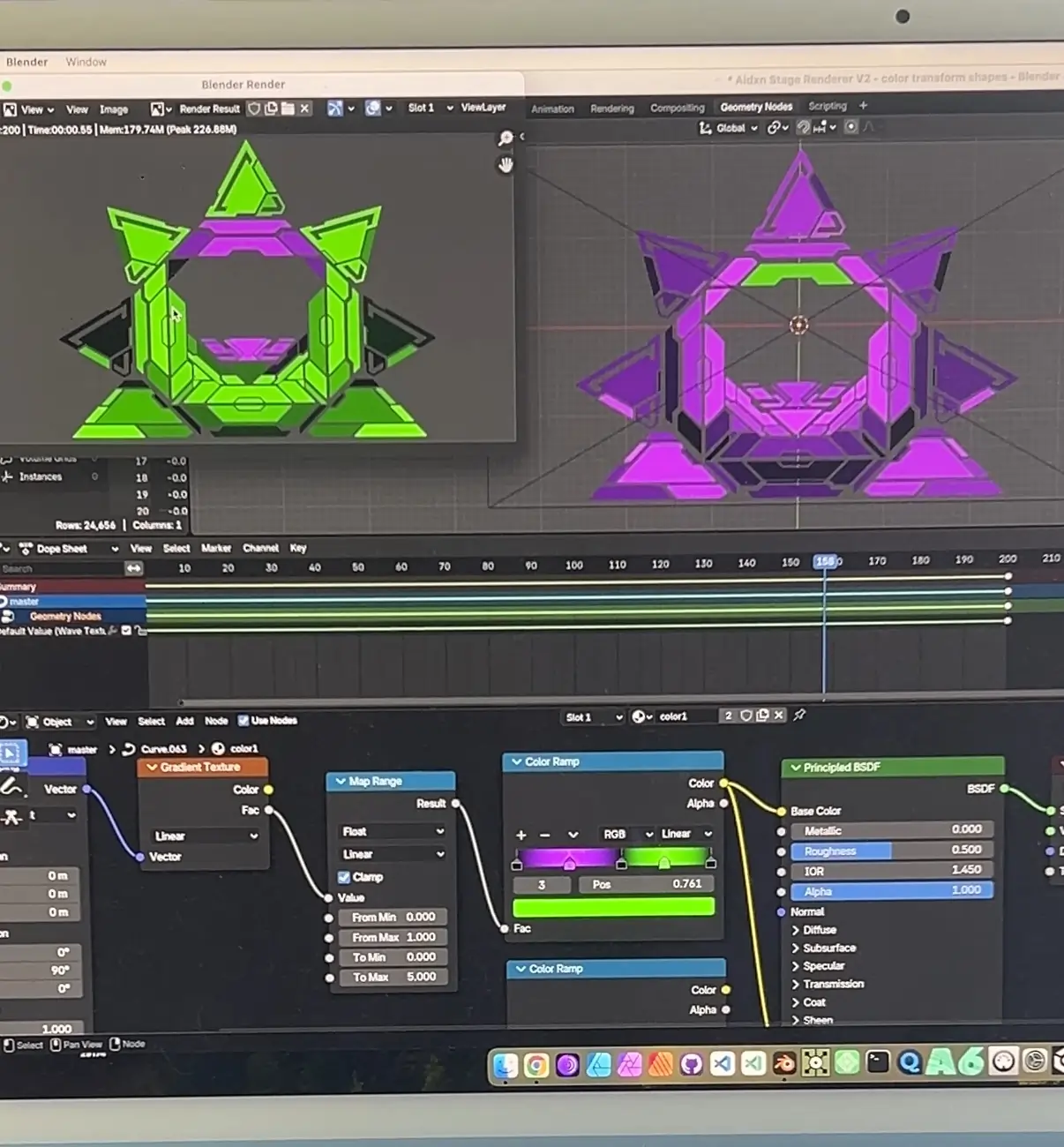
We spec the right gear for your space, with renders for bigger builds so you see it before the night.
03
Delivery & install
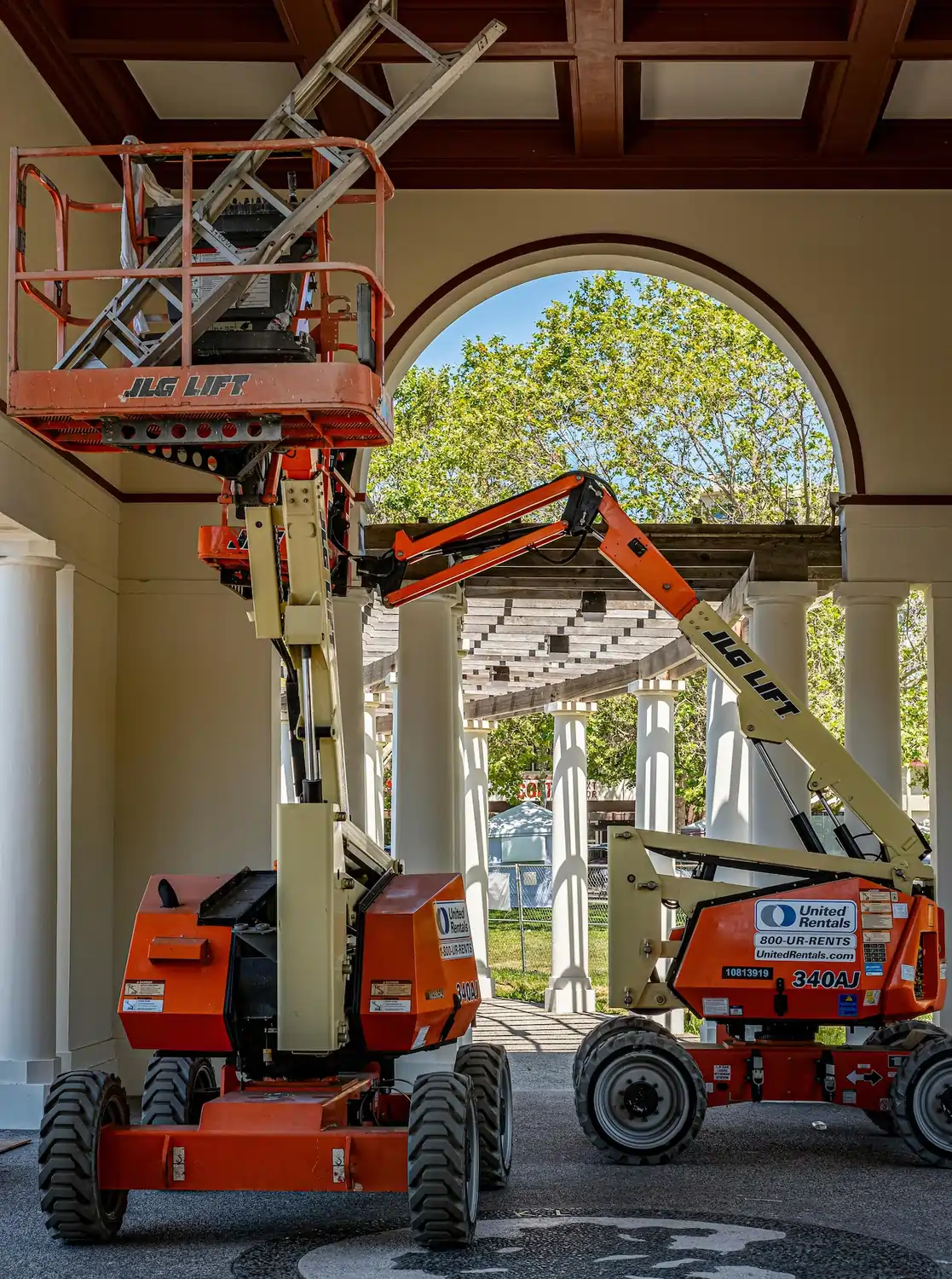
Our crew delivers, rigs and tests everything — you never touch a ladder.
04
Enjoy & packdown
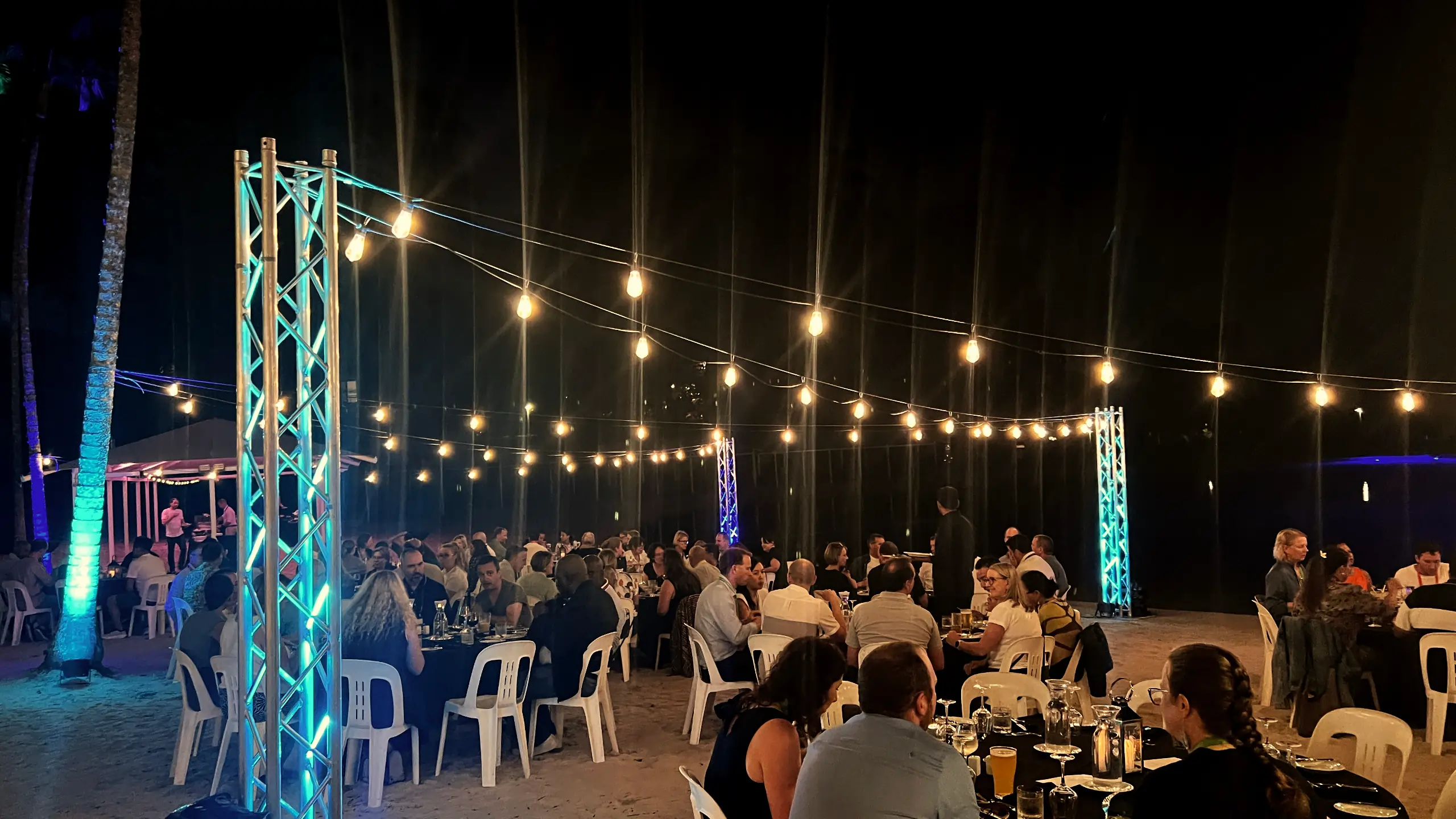
Enjoy the night. When it wraps, we come back and pack it all down.
Frequently asked
Yes. True paddock sites run on generator power, which handles LED festoon easily — a full 200 metre install draws less than a kettle. We plan the generator position so it's out of earshot of your tables, and we cable everything safely. Tell us it's an off-grid site when you enquire and we'll build power into the quote.
We bring the structure. Freestanding poles on weighted bases with tensioned catenary wire between them let us install festoon runs and canopies over completely open ground. Raised 3 metre beams ($200) lift runs over dance floors and walkways. No holes dug, no damage to the site, and everything is rated for the load it carries.
Festoon packages start at $895 for 60 metres, $1495 for 120 metres and $1945 for 200 metres. Every price includes delivery, professional installation and packdown — there's no separate labour charge. Popular add-ons are the dimmable controller at $145 and raised 3 metre beams at $200. Send your site details and we'll quote within 24 hours.
A typical install takes 2 to 3 hours. We usually arrive in the morning or early afternoon, install, test everything, and are gone before your guests arrive. Packdown happens after the event, normally the next morning. If your venue has a tight bump-in window, tell us when you enquire and we'll schedule around it.
Yes. Our festoon is IP65 rated, which means it's sealed against rain, dew and dust — normal hinterland conditions don't affect it. Every fixture we hire is tested and tagged, connections are protected, and rigging is planned with wind in mind. A passing shower during your reception won't touch the lighting.
Check sunset for your exact date, then subtract 20 to 30 minutes — hinterland ridges put valleys in shadow before official sunset. Winter dates can be dark by 5:15pm, summer dates hold light until nearly 8pm. Build golden-hour photos, the reception reveal and lit pathways around that adjusted time, not the published sunset.
Usually, yes. Standard hire is 24 hours, and extended rental is $145 per additional 24 hours. Many hinterland couples run a welcome dinner, wedding day and recovery brunch under the same install — it's often better value than lighting one night only. Confirm your venue allows multi-day setups and we'll arrange the rest.
Very little. Our LED festoon draws 20 watts per 5 metre string, so even large installs are a light load. The real rule is distribution: we run a maximum of 50 metres of festoon per power source, feeding bigger canopies from multiple points. We also keep lighting on separate circuits from catering and the band, which is what prevents mid-reception trips.
Keep reading
More event lighting guides
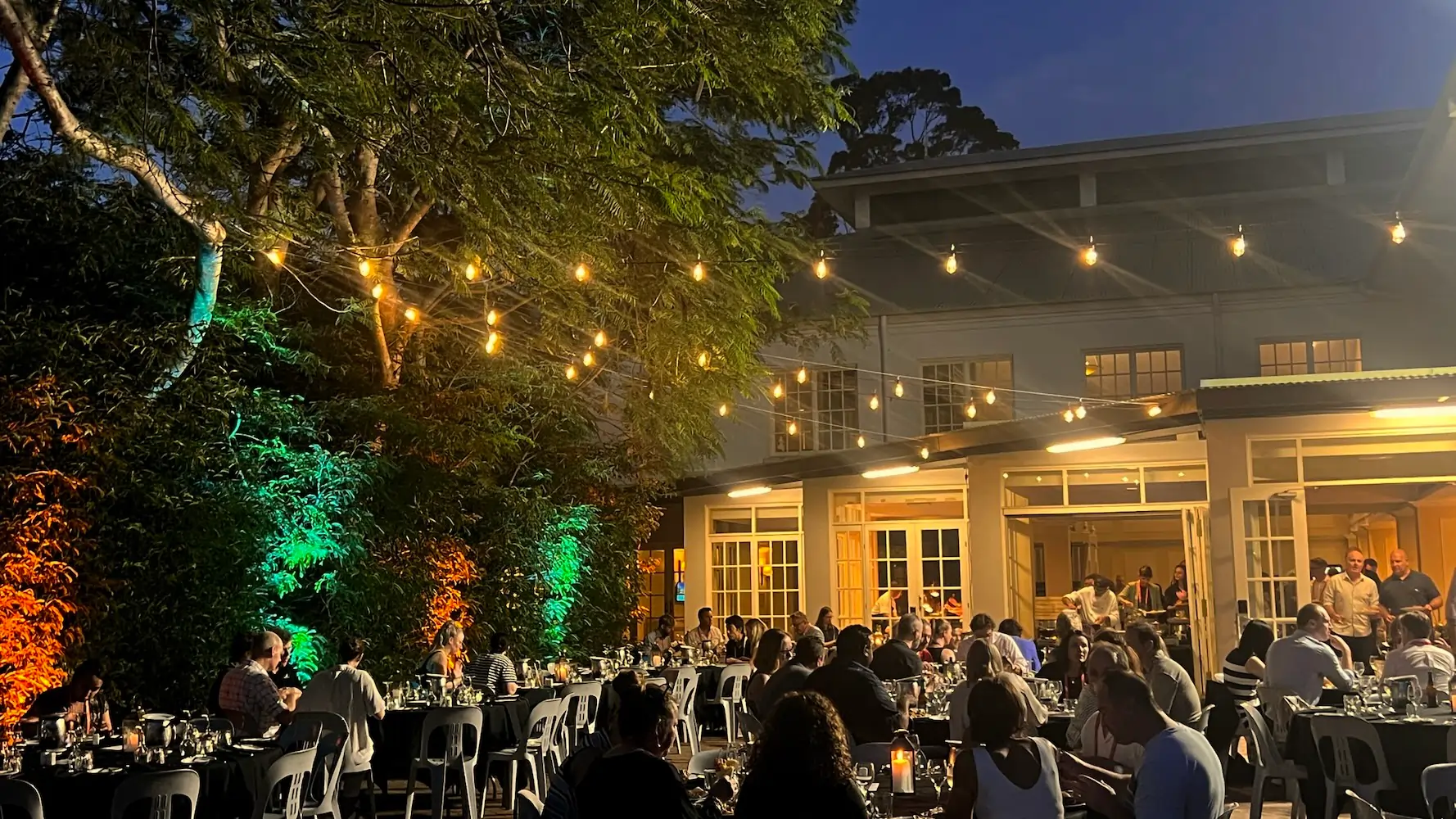
Choosing Event Lighting on the Gold Coast
How to choose event lighting hire on the Gold Coast — venues, coastal weather and what to ask suppliers — from a crew wi…
Read more →
Corporate Event Lighting Guide
How to plan lighting for galas, conferences and launches — branding, stage wash and AV — from a crew with 10+ years ligh…
Read more →
Dance Floor Lighting Ideas
Dance floor lighting ideas for weddings and events — canopies, colour, DMX moments and lasers — from the crew that light…
Read more →
The Event Lighting Checklist
The checklist we run before every install — venue, power, weather, timing and safety — so your event lighting goes right…
Read more →
Event Lighting: Hire vs Buying — The Honest Maths
Event lighting hire vs buying compared honestly — real costs of owning 60m of festoon, when buying makes sense, and what…
Read more →
Festival Lighting Explained
How festival lighting works — stage rigs, DMX programming, lasers and site lighting — explained by operators with 10+ ye…
Read more →
How Professional Festoon Lighting Installation Works
Festoon lighting installation explained — site visits, catenary wire rigging, spans and sag, power planning and why pros…
Read more →Festoon vs Fairy Lights: Which Should You Hire?
Festoon or fairy lights? How the two compare on look, coverage and cost — and when to combine them — from installers wit…
Read more →
Gala Dinner & Awards Night Lighting Guide
Gala dinner and awards night lighting guide — room wash, branded uplighting, gobo logo projection, stage lighting and AV…
Read more →How Much Does Event Lighting Cost?
What event lighting hire really costs — festoon, uplighting, stage rigs and projection — and what drives the price. Hone…
Read more →How to Light a Wedding Reception
Step-by-step guide to lighting a wedding reception — zones, layers and timing — from installers who've lit hundreds of r…
Read more →LED Uplighting vs Festoon Lighting: What's the Difference?
LED uplighting vs festoon lighting compared — what each does, what each costs and how to combine them — from installers…
Read more →Marquee Lighting Guide
How to light a marquee properly — canopies, pole wraps, uplighting and dance floors — from installers who rig marquees w…
Read more →Outdoor Wedding Lighting Tips
Practical outdoor wedding lighting tips — weatherproofing, power, trees and timing — from installers who light coastal w…
Read more →Projection Mapping Explained
What projection mapping is, how it works and what it costs — buildings, stages and reveals — explained by technicians wh…
Read more →Uplighting Colour Guide: Choosing the Right Palette
How to choose uplighting colours for weddings, galas and events — warm vs cool, brand colours, and the shades that flatt…
Read more →Venue Power for Event Lighting: What You Actually Need
Venue power for event lighting explained — 10A vs 15A circuits, real wattage numbers, when you need a generator, and the…
Read more →The Complete Wedding Lighting Guide
Plan your wedding lighting — ceremony, reception and dance floor — with a crew that's lit weddings across QLD and NSW fo…
Read more →
Wet Weather Event Lighting: Planning for QLD and Northern NSW
Wet weather event lighting for QLD and Northern NSW — IP65 ratings explained, storm and wind planning, wet season tips a…
Read more →Get a lighting quote in 24 hours.
Tell us about your event — we'll come back with options and a price.