
Corporate Events
Lighting that makes a gala feel like the money was well spent
A gala dinner or awards night lives or dies on atmosphere, and atmosphere is mostly lighting. This guide covers how we light corporate evenings — room wash, branded colour, stage and lectern light, gobo logos and AV integration — from a crew with 10+ years in AV and events.
The Brief
What gala lighting has to do that other event lighting doesn't
A wedding has one audience and one story. A gala has three: the guests in the room, the sponsors and executives whose names are on it, and the cameras — because almost every awards night now feeds photography, video or a livestream. Good gala lighting has to serve all three at once, which is why it's planned differently from a party.
The job breaks into a few distinct layers. The room needs an overall wash that sets the mood the moment guests walk in. Tables need enough light for people to eat, read menus and talk without the room feeling bright. The stage and lectern need proper front light so speakers look good live and on camera. And the brand needs to be visibly present — through colour, projected logos, or both — because someone signed off on the budget and the room should show it.
The other difference is precision of timing. A gala runs to a run sheet: entrée at 7:10, first award block at 7:45, keynote at 8:30. The lighting has to move with it — dimming for speeches, lifting for service, shifting for the band — which means someone has to be operating or the states have to be programmed. Our gala dinner lighting and awards night lighting pages cover the packages; this guide covers how the decisions get made.
The Room
Room wash versus table lighting: get both, in that order
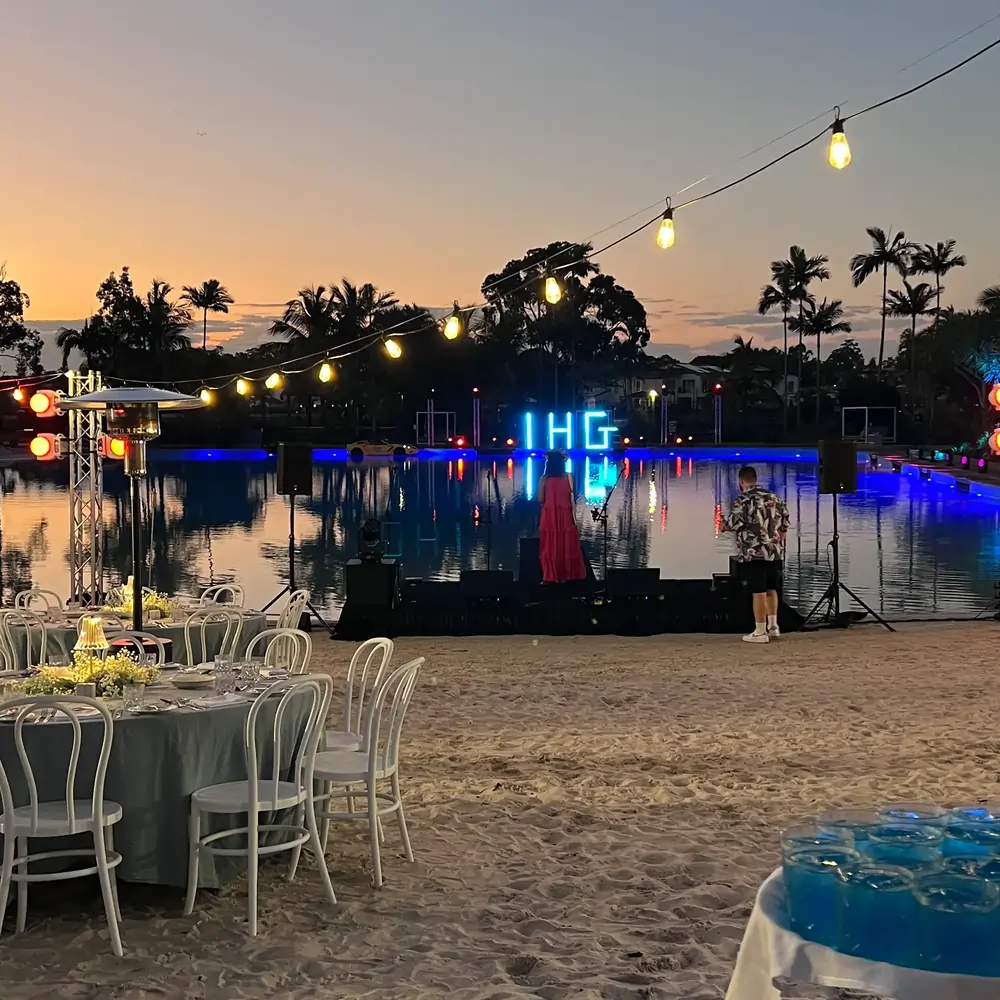
The room wash is the base coat. It's the colour and brightness the whole space sits in, usually built from LED uplights positioned around the perimeter walls, columns and feature points. Get the wash right and a plain ballroom becomes a branded environment; skip it and no amount of table styling saves the room, because everything above head height stays hotel-beige.
Table lighting is the second layer, and it earns its keep in two ways. Practically, guests need to see food, drinks and each other — a room washed to a deep brand colour with nothing on the tables leaves faces in shadow, which photographers will tell you about afterwards. Atmospherically, low warm points of light at table level are what make a big room feel intimate. Options that work well:
- Overhead festoon or pendants: warm 2700K light over the dining area brings the ceiling height down visually and flatters every face under it — our most-requested look for offsite and warehouse venues.
- Table centrepiece lighting: low, warm and dimmable, sitting inside the florals or styling rather than fighting them so guests read menus and faces without the room brightening.
- Chandeliers: for formal galas, a row of hired chandeliers over the tables signals occasion in a way nothing else does.
The order matters: choose the wash first, because its colour decides how warm the table layer should be to sit comfortably inside it. A cool corporate blue wash wants noticeably warm table light as a counterpoint; an amber wash lets the tables run softer. And keep one zone deliberately different — the bar or dance floor lit a step brighter or a shade off the main palette gives guests a visual cue about where the night moves after dessert.
The Stage
Stage and lectern lighting: the part guests only notice when it's wrong
Nobody leaves a gala talking about how well lit the lectern was. They absolutely leave talking about the keynote speaker they could barely see, or the award winner whose big moment is a dark smudge in every photo. Stage lighting is invisible when right and reputation-damaging when wrong, so it's worth understanding what "right" means.
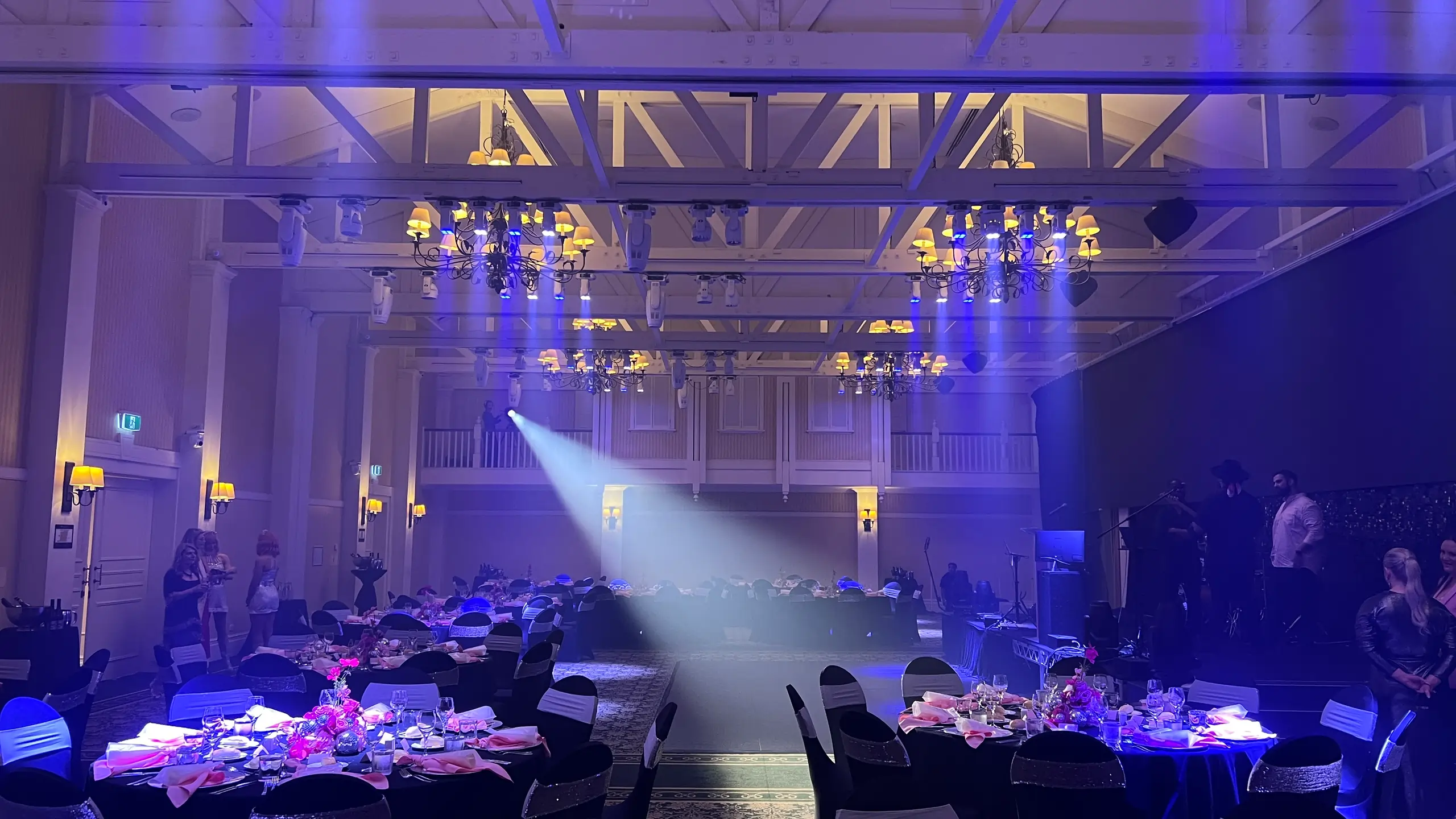
Speakers need front light — angled light from in front and slightly above, bright enough to lift their face out of the room without blinding them off the autocue or notes. If the night is being filmed or streamed, this stops being optional: cameras need considerably more light on a face than the human eye does, and a stage that looks moody and fine in the room can be unusable on video. We light lecterns and stages to camera when a videographer is booked, and we ask about that at quoting rather than discovering a camera operator on the night.
The second stage job is balance with screens. Most awards nights run LED screens or projection for winner slides and sponsor loops, and screens are bright. If the stage wash overpowers them the content washes out; if the screens overpower the stage the presenters become silhouettes. Getting that balance right is an AV conversation as much as a lighting one, which is why our technical production service exists — one crew responsible for the stage picture as a whole, rather than a lighting supplier and an AV supplier meeting for the first time at bump-in.
The Brand
Branded colour and gobo logos: making the room unmistakably yours
This is the layer that separates a gala from a nice dinner. Two tools do most of the work, and they're both more affordable than clients expect.
The first is uplighting matched to your brand palette. Modern LED uplights can be tuned to a specific colour, so the perimeter wash of the room becomes your corporate blue, your sponsor's red, or a two-colour scheme alternating around the walls. It photographs brilliantly, it's the single fastest way to make a hired ballroom feel owned for the night, and colours can change during the event — one palette for arrival drinks, another for the awards, a shift for the after-party. Our LED uplighting hire covers the fixtures; send us your brand guidelines and we match to them.
The second is gobo projection: your logo, event name or sponsor marks projected in crisp light onto a wall, the dance floor or the entry. A gobo is a custom-cut stencil that sits inside a projector fixture, so the result is sharp-edged light rather than a dim image — it reads clearly even in a lit room. Entry-point gobos are especially effective, because every guest walks past the brand on the way in and every arrival photo carries it. See gobo projection hire for how the artwork process works; allow lead time for the gobo to be cut, so this is one to lock in early rather than the week before.
Used together — palette on the walls, logo at the entry and on the floor — the branding is everywhere without a single banner being hung.
AV Integration
Lighting that moves with the run sheet, not against it
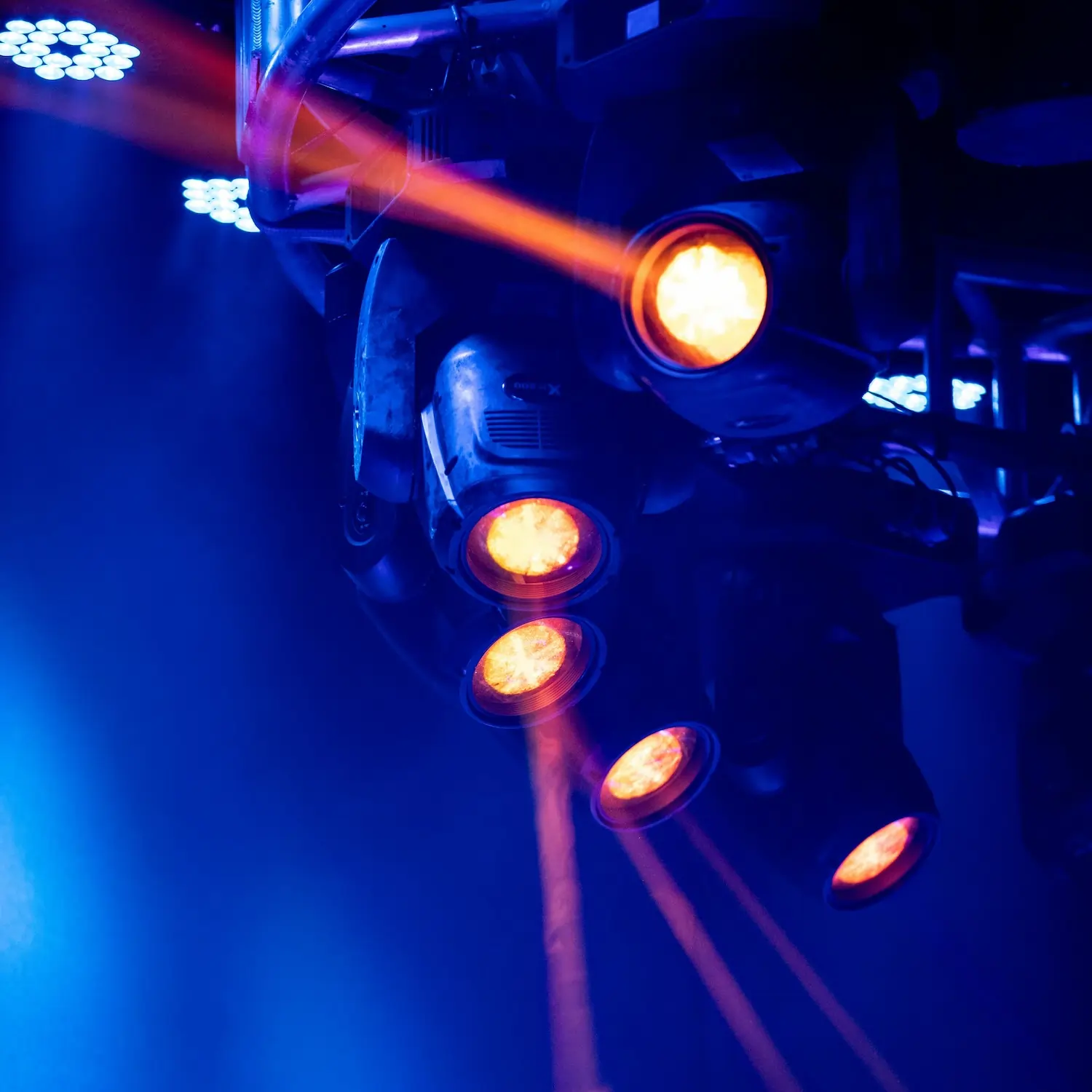
The difference between hired lights and a produced evening is control. On a professionally run gala, the lighting is programmed into states — arrival, dinner, speeches, awards, band — and those states change on cue with the run sheet. The room dims as the MC takes the stage. The stage lifts as a winner walks up. The dance floor wakes up when the band does. None of that happens by accident; it happens over DMX, the control protocol that lets one operator drive every fixture in the room from a single desk.
This is where lighting and AV stop being separate trades. Speeches need microphones, winner slides need screens, the band needs sound, and all of it needs to be coordinated with light. When those systems come from different suppliers who haven't spoken, cues get missed and the night feels ragged. When they're integrated — planned together, cabled together, operated side by side — the event feels seamless, and nobody in the audience can say why. That coordination is exactly what our AV integration service does, and for larger productions, effects like lasers and moving fixtures run off the same control system rather than bolting on separately.
A practical tip for organisers: share your draft run sheet with your lighting supplier before the final version locks. Ten minutes of markup — "dim here, lift here, colour change here" — costs nothing at planning stage and is the difference between lighting that performs and lighting that just sits there switched on.
The Venue
Ballrooms versus offsite venues: two very different bump-ins
Where you hold the gala changes the lighting job more than any other decision, so it's worth understanding the trade before you sign the venue contract.
Hotel ballrooms and convention centres come with infrastructure: rigging points in the ceiling, plentiful power, loading docks and in-house technicians. The constraint is time and rules. Ballroom bump-in windows are often tight — sometimes just a few hours between a daytime conference and your 6:30pm doors — and in-house policies govern what external suppliers can rig and where. We work inside those windows constantly; the key is telling us the exact access time when you enquire so the crew size matches the window. A four-hour bump-in with a two-person crew and a four-hour bump-in with a six-person crew are very different plans.
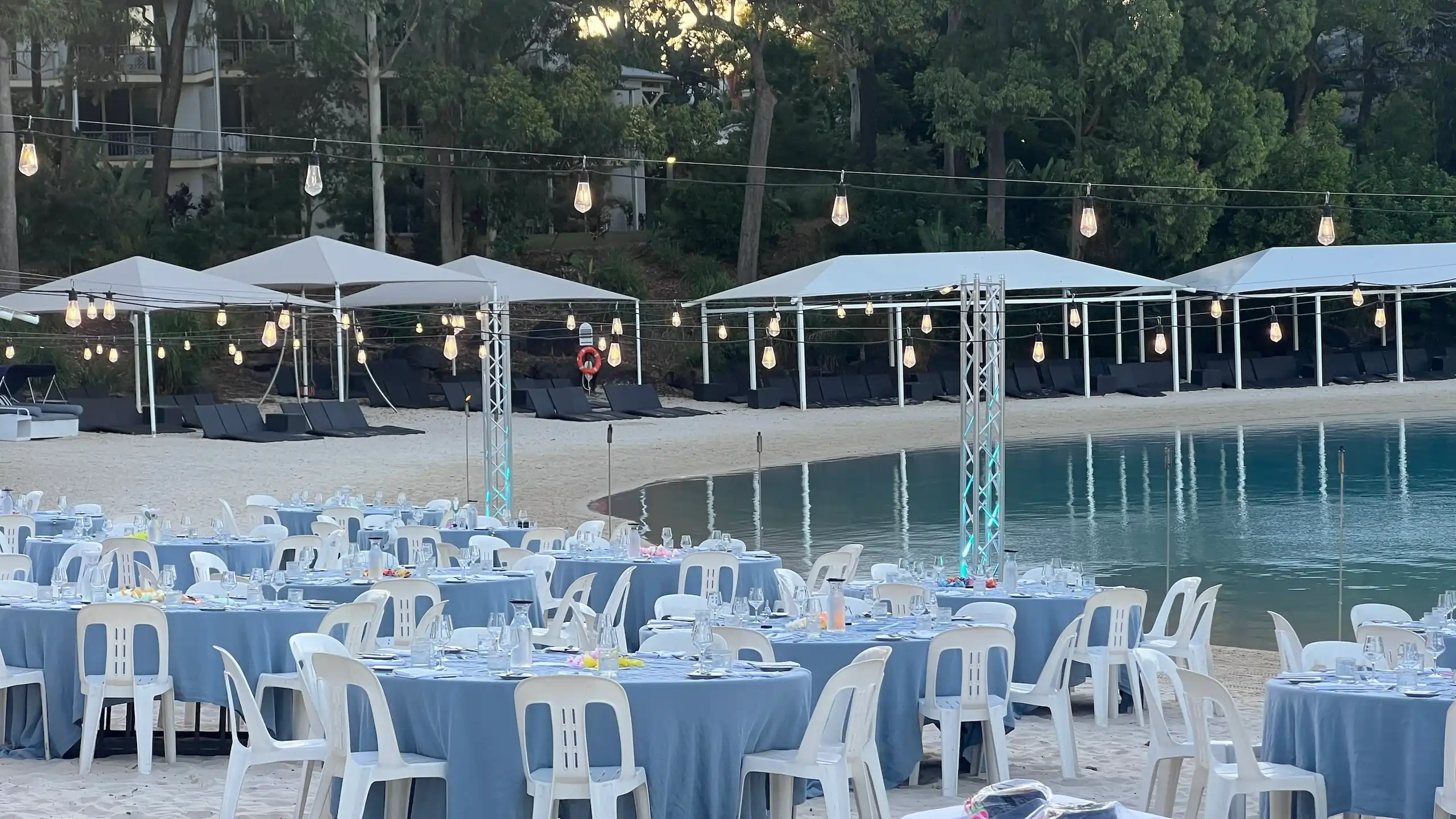
Offsite venues — warehouses, wineries, marquees, rooftops — flip the equation. You usually get generous access, sometimes a full day or more, but little to no infrastructure: we bring rigging, distribution and sometimes power. The blank canvas is why offsite galas photograph so distinctively, and why they need earlier planning. A site visit before quoting is standard for offsite venues, and it's where we turn the blank canvas into a full lighting plan: rigging positions, power distribution, and a fixture list matched to the space rather than guessed at. The same principles apply to conferences and product launches, where staging and screens carry even more of the load.
Neither venue type is better. Ballrooms buy convenience and cost you flexibility; offsite buys wow-factor and costs you planning time. Both produce outstanding nights when the lighting is planned to suit them. The one question worth asking either venue early: what exactly is included in-house, and what are external suppliers allowed to do? The answer changes the quote, the crew size and sometimes the design itself, and it's far cheaper to learn before contracts are signed than at bump-in.
Getting Started
How to brief a lighting supplier so the quote comes back right
The fastest route to an accurate quote is a brief with the practical details in it. You don't need to know lighting terminology — that's our job — but five pieces of information let us quote properly the first time:
- Venue and date: the venue name (or site address for offsite) and the event date, plus your bump-in and bump-out windows if you know them.
- Guest count and format: seated dinner, cocktail, awards with a stage — the format drives the fixture list.
- Brand requirements: brand colours for the uplighting, and whether you want a gobo logo — gobos need lead time for cutting, so flag this early.
- AV picture: screens, livestream, band or DJ, and who's supplying them, so lighting and AV are planned together rather than colliding at bump-in.
- The feeling: one sentence on what walking into the room should feel like. "Prestige and calm" and "high energy from the door" produce genuinely different designs.
Send that through our contact page and you'll have a quote back within 24 hours. Every fixture we send out is tested and tagged, every install is done by our own crew, and we've spent 10+ years in AV and events making corporate rooms look like the budget was bigger than it was. For the wider service picture, our corporate event lighting page covers everything from single-room dinners to multi-day productions.
How it works
01
Get a quote
Tell us about your event and venue — we come back with options and a price within 24 hours.
02
Design & plan
We spec the right gear for your space, with renders for bigger builds so you see it before the night.
03
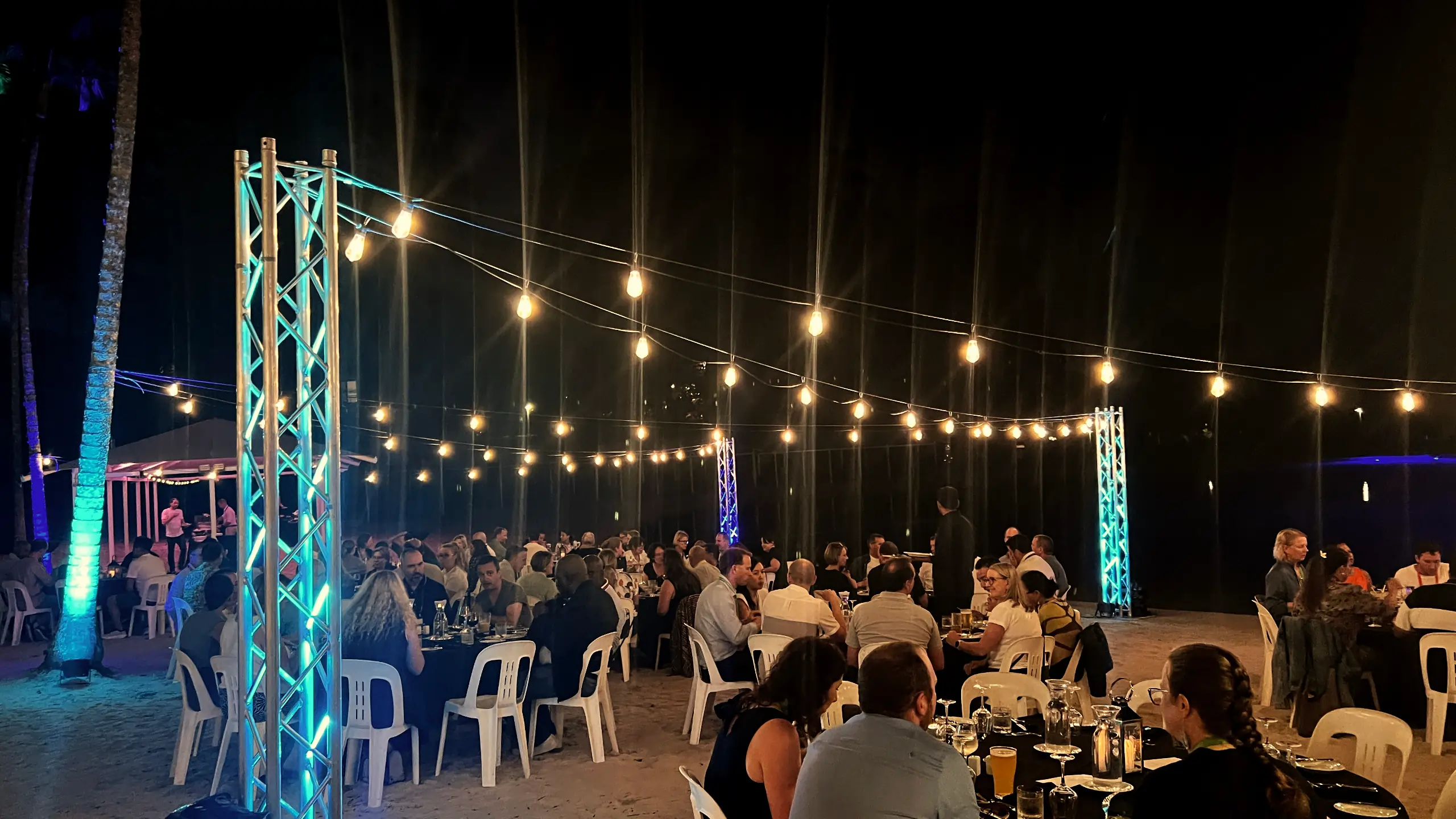
Delivery & install
Our crew delivers, rigs and tests everything — you never touch a ladder.
04
Enjoy & packdown
Enjoy the night. When it wraps, we come back and pack it all down.
Frequently asked
Four layers: a room wash (usually LED uplighting around the perimeter) to set the overall look, warm table-level lighting so guests can see food and faces, proper front light on the stage and lectern for speakers, and branded elements like colour-matched uplighting or a gobo logo. Most galas look finished with all four working together, planned to one run sheet.
Yes. Modern LED uplights tune to specific colours, so we match your brand palette from your style guide — send us the brand colours or guidelines with your enquiry. Colours can also change through the night: one scheme for arrival drinks, another for the awards, a shift for the after-party, all programmed in advance.
A gobo is a custom-cut stencil that sits inside a projector fixture, throwing your logo or event name onto a wall, floor or entryway as crisp, sharp-edged light. It reads clearly even in a lit room and appears in every arrival photo. Allow lead time for the gobo to be cut, so lock it in early rather than the week before your event.
By matching crew size to the window. Ballrooms often allow only a few hours between a daytime event and your evening doors, so we scale the install team to fit — a short window just means more hands. Tell us your exact access time when you enquire and we plan the install, testing and cabling to be finished before your first guest arrives.
For a proper gala, yes — either a live operator or pre-programmed states triggered on cue. The room dims for speeches, the stage lifts for award winners, the dance floor changes when the band starts. All of it runs over DMX control from one desk. Static lighting that never changes is the clearest tell of an under-produced event.
Only if it's planned for camera, which is why we ask about filming at quoting. Cameras need considerably more front light on a speaker's face than the human eye does — a stage that looks moody and fine in the room can be unusable on video. Tell us a videographer or stream is booked and we light the stage to camera from the start.
For end-of-year season (October to December), book two to three months out — venues, crews and gobo production all get squeezed at once. Outside peak season, a few weeks is usually workable. Either way we return quotes within 24 hours, and custom gobos are the longest-lead item, so flag those first.
Yes, and it's usually the better outcome. When lighting, audio and screens come from separate suppliers who meet at bump-in, cues get missed and the balance between stage light and screen brightness suffers. Our AV integration service plans and operates them as one system, so speeches, slides and lighting changes land together on the night.
Keep reading
More event lighting guides
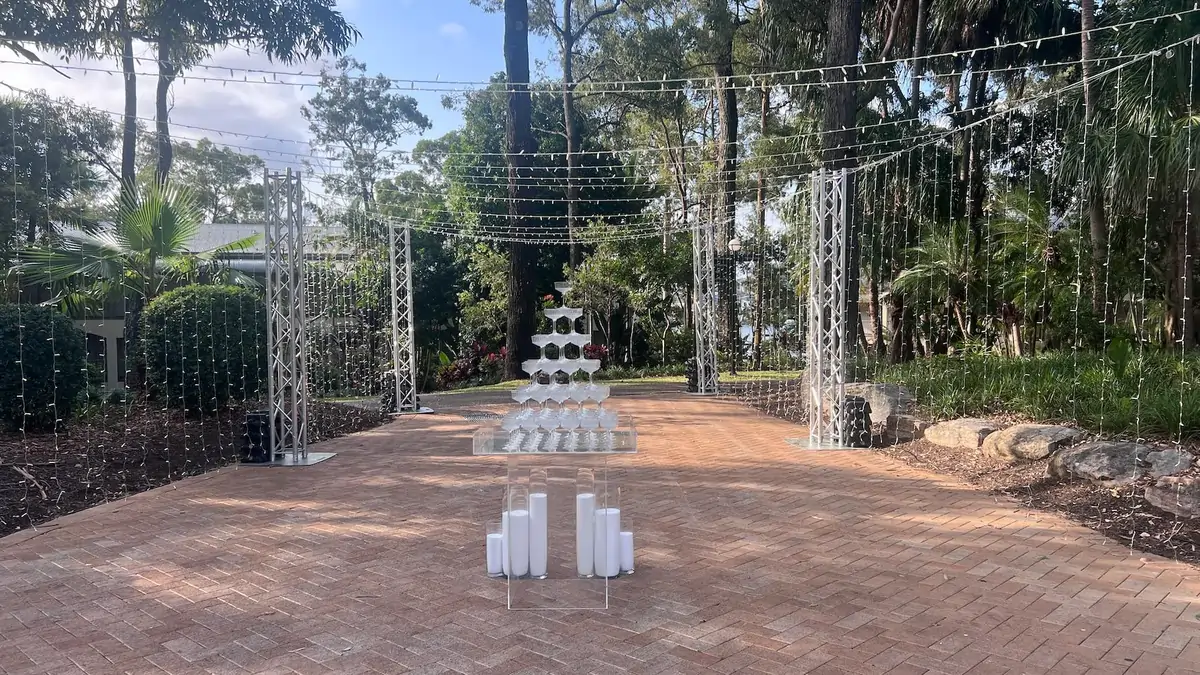
Byron Bay Hinterland Wedding Lighting Guide
Byron Bay hinterland wedding lighting guide covering barns, tipis and paddock venues — power, rigging and sunset timing…
Read more →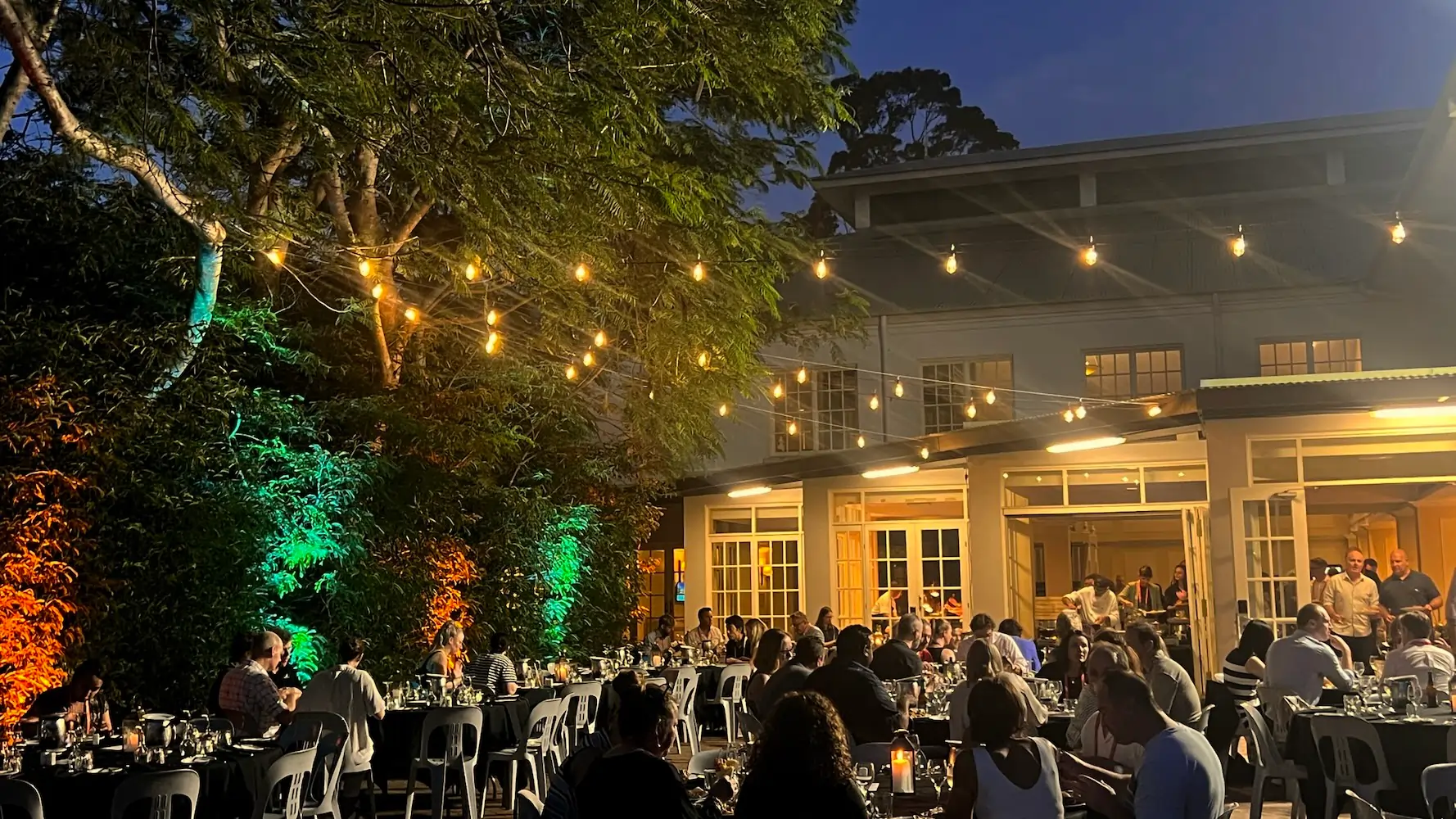
Choosing Event Lighting on the Gold Coast
How to choose event lighting hire on the Gold Coast — venues, coastal weather and what to ask suppliers — from a crew wi…
Read more →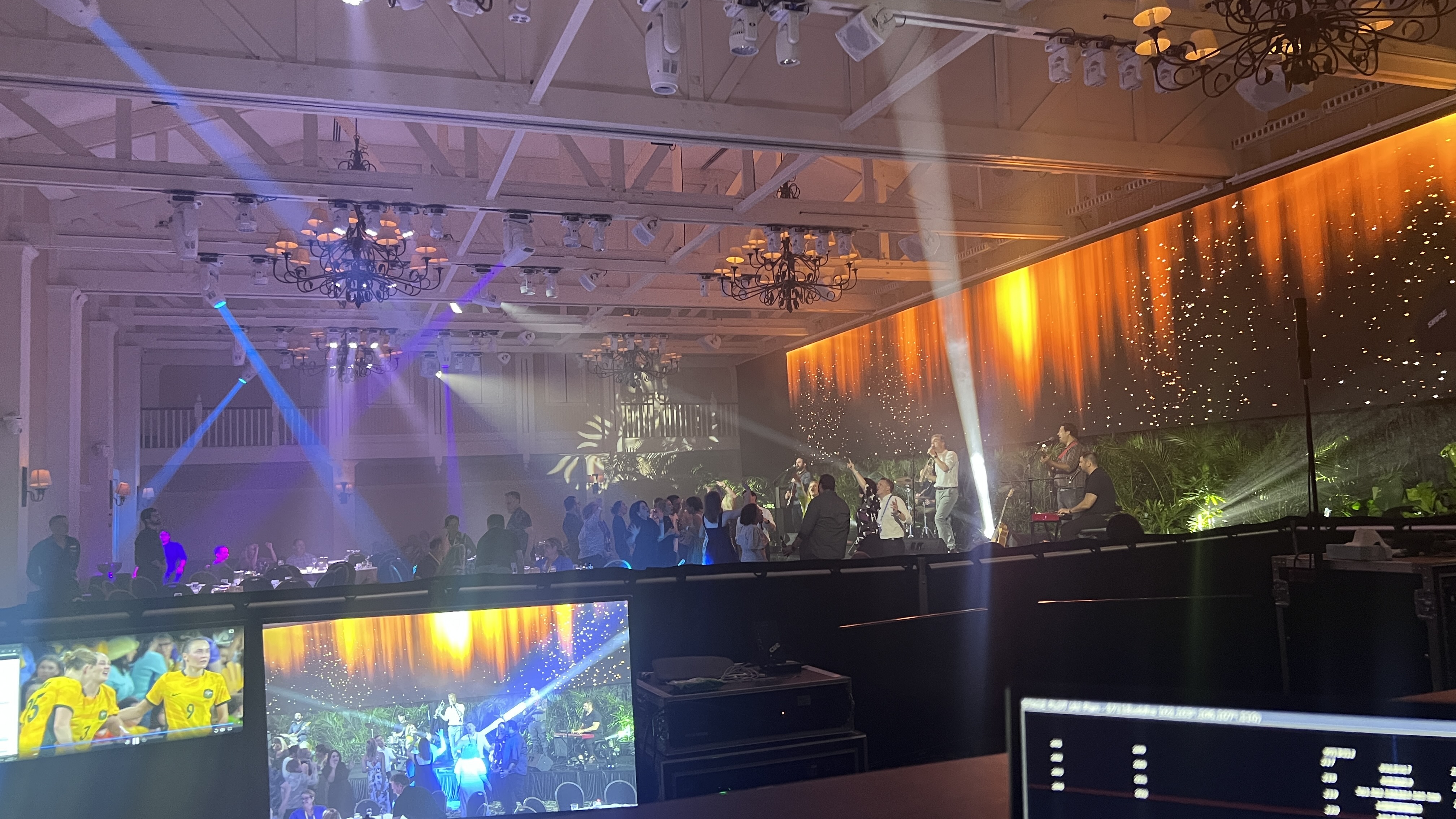
Corporate Event Lighting Guide
How to plan lighting for galas, conferences and launches — branding, stage wash and AV — from a crew with 10+ years ligh…
Read more →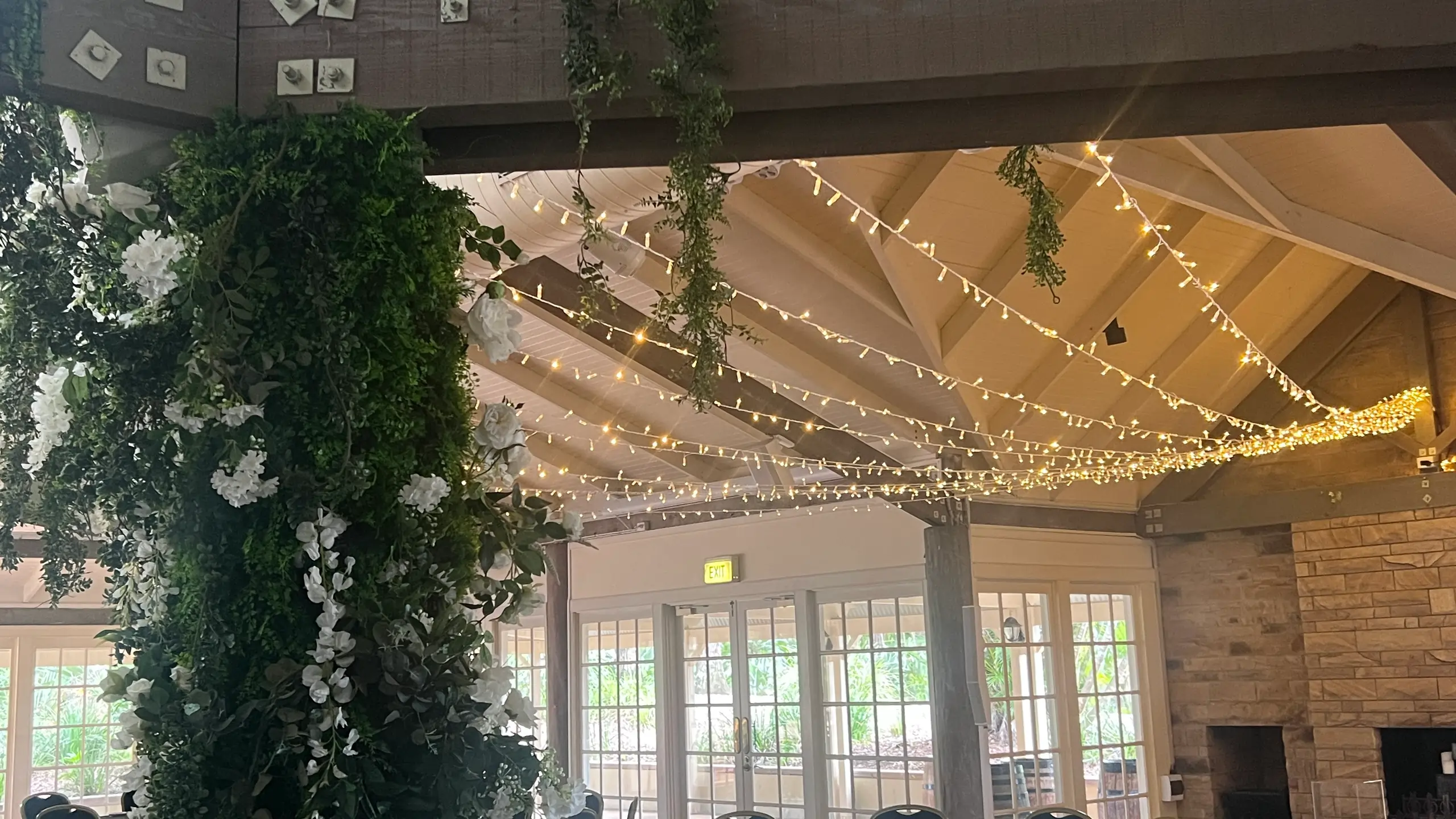
Dance Floor Lighting Ideas
Dance floor lighting ideas for weddings and events — canopies, colour, DMX moments and lasers — from the crew that light…
Read more →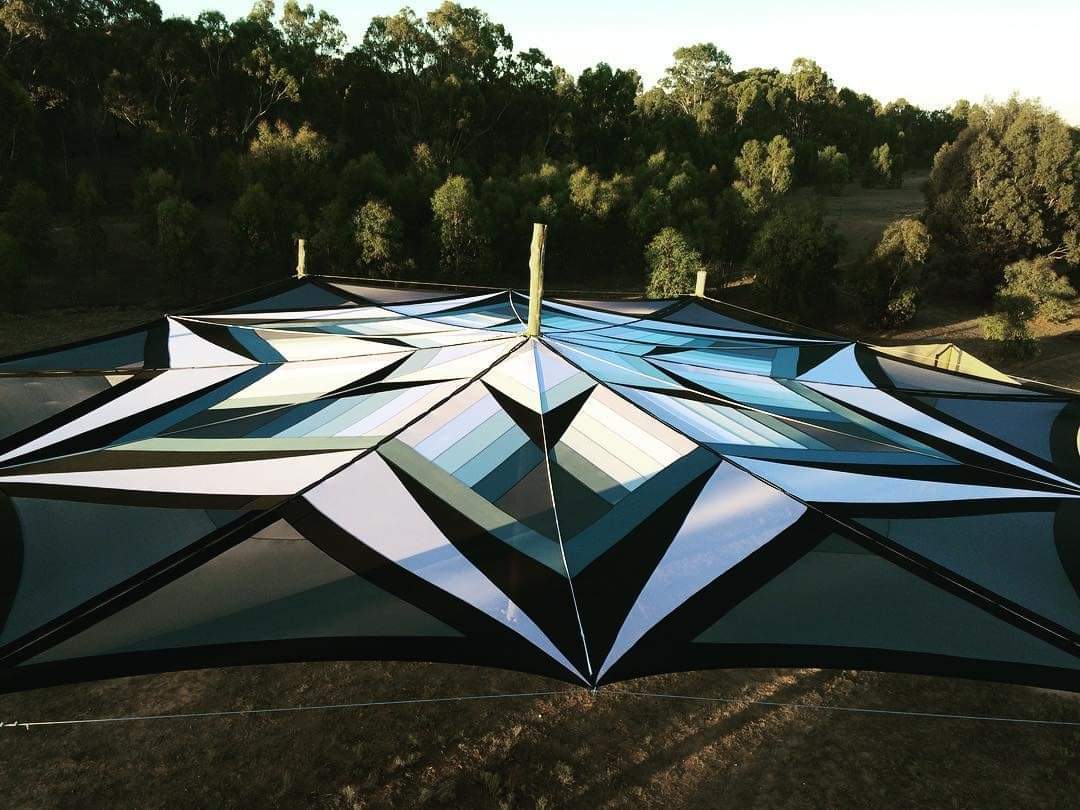
The Event Lighting Checklist
The checklist we run before every install — venue, power, weather, timing and safety — so your event lighting goes right…
Read more →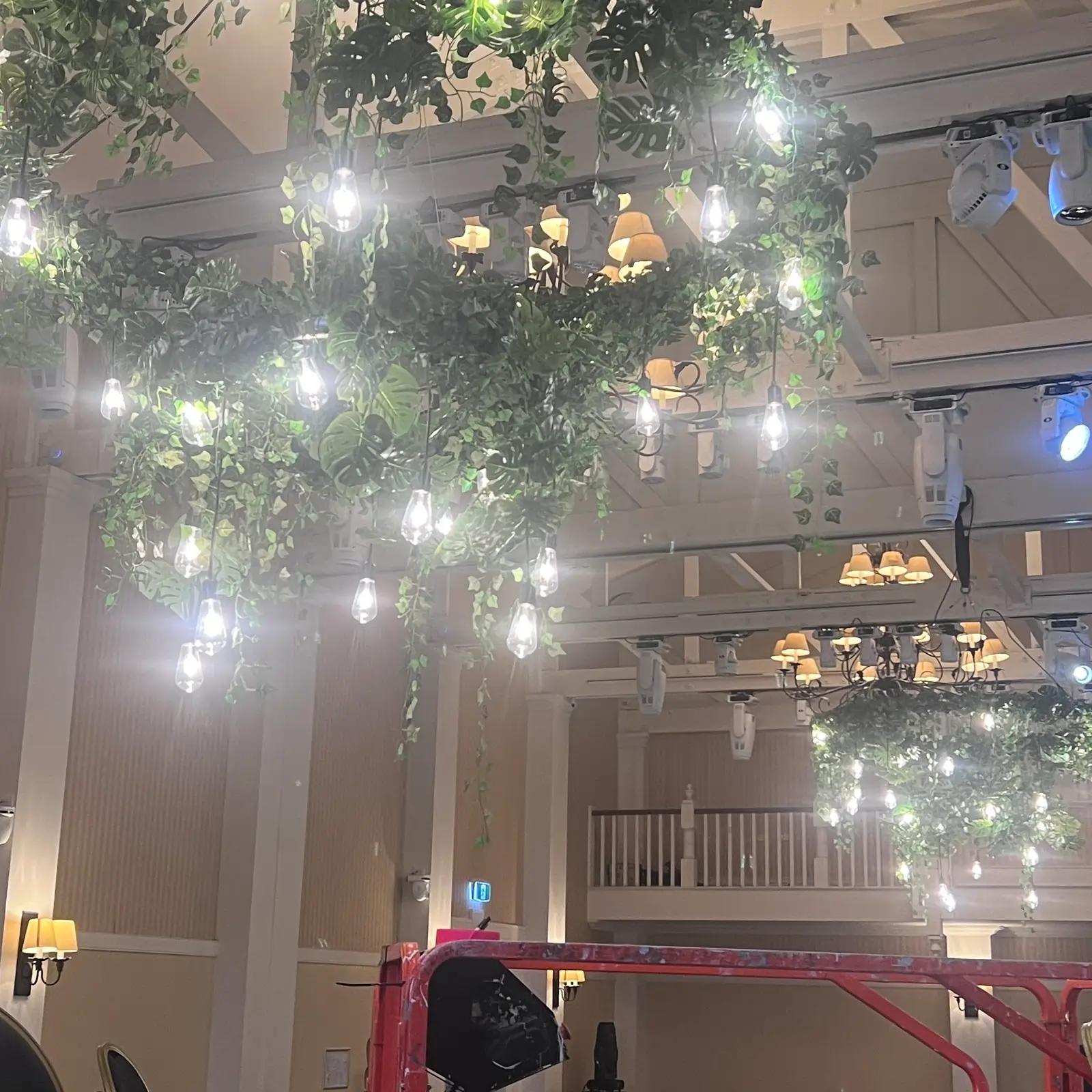
Event Lighting: Hire vs Buying — The Honest Maths
Event lighting hire vs buying compared honestly — real costs of owning 60m of festoon, when buying makes sense, and what…
Read more →Festival Lighting Explained
How festival lighting works — stage rigs, DMX programming, lasers and site lighting — explained by operators with 10+ ye…
Read more →
How Professional Festoon Lighting Installation Works
Festoon lighting installation explained — site visits, catenary wire rigging, spans and sag, power planning and why pros…
Read more →
Festoon vs Fairy Lights: Which Should You Hire?
Festoon or fairy lights? How the two compare on look, coverage and cost — and when to combine them — from installers wit…
Read more →How Much Does Event Lighting Cost?
What event lighting hire really costs — festoon, uplighting, stage rigs and projection — and what drives the price. Hone…
Read more →How to Light a Wedding Reception
Step-by-step guide to lighting a wedding reception — zones, layers and timing — from installers who've lit hundreds of r…
Read more →LED Uplighting vs Festoon Lighting: What's the Difference?
LED uplighting vs festoon lighting compared — what each does, what each costs and how to combine them — from installers…
Read more →Marquee Lighting Guide
How to light a marquee properly — canopies, pole wraps, uplighting and dance floors — from installers who rig marquees w…
Read more →Outdoor Wedding Lighting Tips
Practical outdoor wedding lighting tips — weatherproofing, power, trees and timing — from installers who light coastal w…
Read more →Projection Mapping Explained
What projection mapping is, how it works and what it costs — buildings, stages and reveals — explained by technicians wh…
Read more →Uplighting Colour Guide: Choosing the Right Palette
How to choose uplighting colours for weddings, galas and events — warm vs cool, brand colours, and the shades that flatt…
Read more →Venue Power for Event Lighting: What You Actually Need
Venue power for event lighting explained — 10A vs 15A circuits, real wattage numbers, when you need a generator, and the…
Read more →The Complete Wedding Lighting Guide
Plan your wedding lighting — ceremony, reception and dance floor — with a crew that's lit weddings across QLD and NSW fo…
Read more →
Wet Weather Event Lighting: Planning for QLD and Northern NSW
Wet weather event lighting for QLD and Northern NSW — IP65 ratings explained, storm and wind planning, wet season tips a…
Read more →Get a lighting quote in 24 hours.
Tell us about your event — we'll come back with options and a price.