
Weather Planning
Outdoor lighting that doesn't care about the forecast
Between summer storms, sea breezes and a wet season that runs November to March, our corner of Australia tests outdoor lighting harder than almost anywhere. Here's how we plan for it — IP ratings in plain English, what's actually safe in the rain, and the contingencies that save events.
Local Reality
The weather we actually plan for
If you're holding an outdoor event anywhere between Brisbane and Byron Bay, the honest starting point is this: assume weather. Southeast Queensland and the Northern Rivers get spectacular summer storms that build all afternoon and break right around canapés. Coastal sites from the Gold Coast down to Ballina add salt air and sea breezes that turn into genuine wind by evening. And hinterland venues can be ten degrees cooler and considerably wetter than the coast on the same day.
None of this means outdoor events are a bad idea — some of the best events we've ever lit happened under moody skies. It means the lighting has to be specified for the conditions from day one, not adapted in a panic when the radar turns purple. After 10+ years lighting events across this region, weather planning isn't a special service we offer. It's just how every outdoor job gets designed.
This guide covers what that looks like in practice: what IP ratings really mean, how we handle storms and wind, why the wet season needs earlier planning, and the contingencies worth having. If your date lands between November and March, this is especially worth five minutes of your time before you get a quote.
One mindset shift up front makes everything else easier: stop hoping for good weather and start designing for real weather. Hope produces events where everyone refreshes the radar app for a fortnight. Design produces events where the forecast is just information, because every version of the day already has a plan attached. That shift costs nothing and it's the single biggest difference between the outdoor events that stay relaxed and the ones that don't.
IP Ratings
IP65 explained, and why indoor gear fails outside
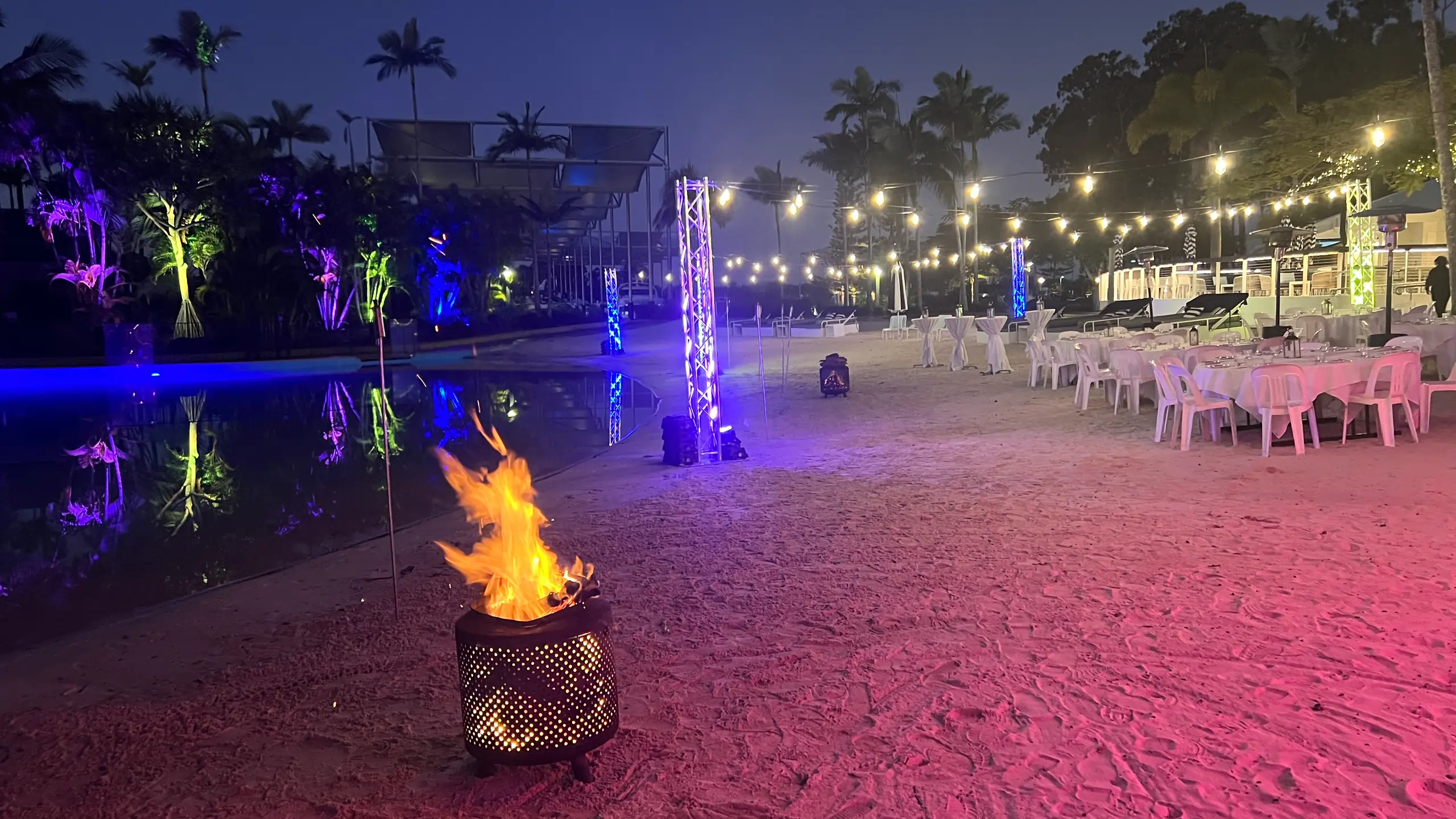
Every piece of electrical equipment carries an IP rating — short for Ingress Protection — that tells you exactly what it can withstand. It's two digits: the first scores protection against dust and solids from 0 to 6, the second scores protection against water from 0 to 9. Our festoon lighting is rated IP65: completely sealed against dust, and protected against water jets from any direction. Rain, sea spray and a sprinkler that nobody turned off are all within its job description.
Compare that with what fails at DIY events every summer:
- IP20 gear — most indoor party lights and cheap string lights bought online — has effectively no water protection at all. Outdoors, it's unsafe the moment the air gets damp, let alone wet.
- IP44 gear handles splashes only. Fine under solid cover, not fine strung across an open lawn in a Queensland storm.
- Indoor extension leads and power boards are the most common failure point of all — the lights survive the rain and the connection behind the tree doesn't.
The rating on the fixture is only half the story. Plugs, joins and distribution all have to match, which is why our outdoor installs use weather-protected connections end to end, with joins positioned off the ground and out of pooling water.
If you take one thing from this section, make it this: when you're comparing suppliers or a venue's house lighting, ask for the IP rating in writing. It's a one-line answer that any professional can give instantly, and hesitation tells you as much as the number does. Everything in our outdoor range is IP65 as standard, because in this climate anything less is a coin toss with your event.
Storms & Wind
Rain is easy. Wind is the one we respect
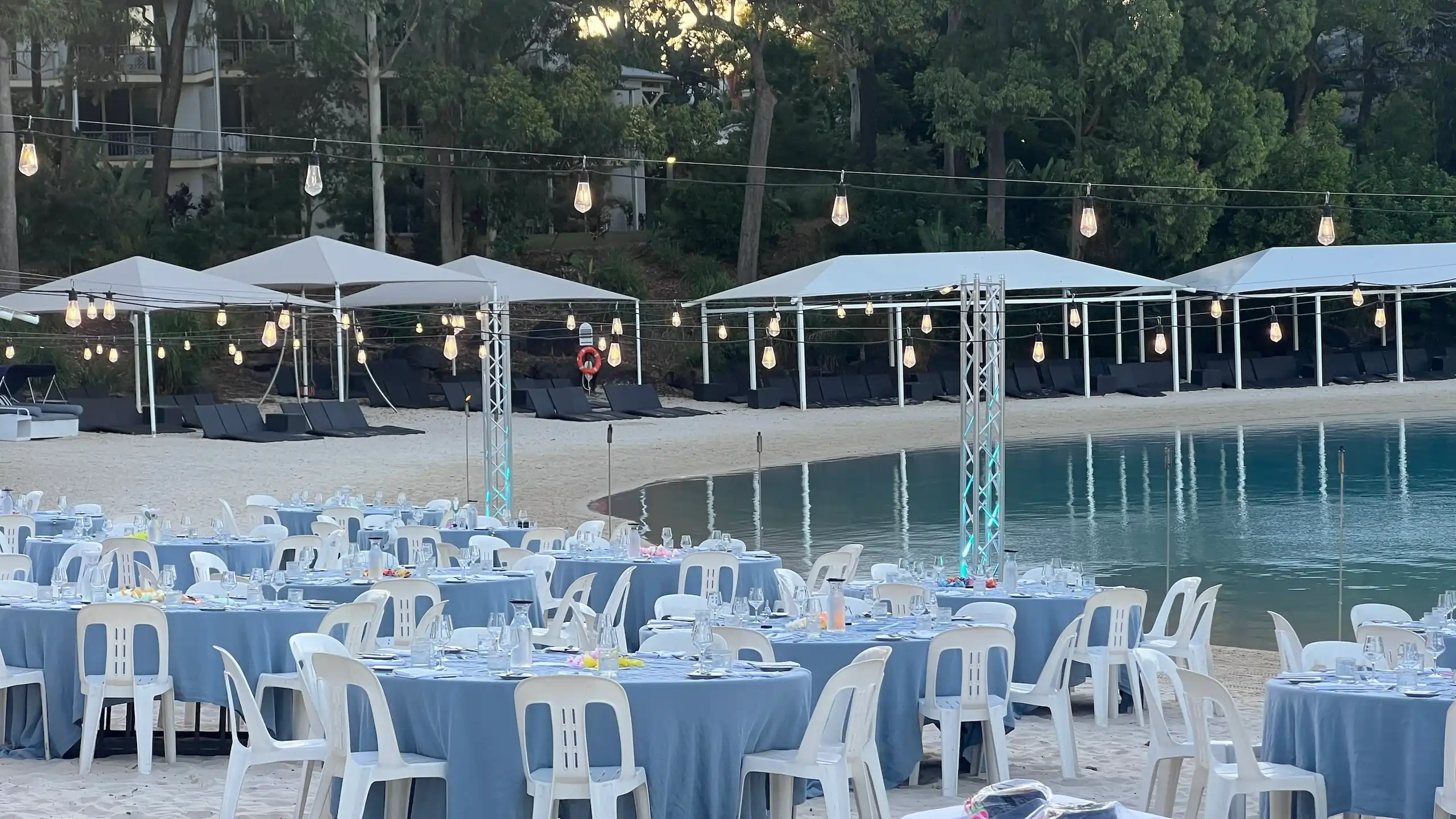
Here's something that surprises most clients: rain is the easy part. IP65 festoon runs happily in a downpour, and some of our favourite photos ever taken under our lighting feature wet pavement doubling every bulb as a reflection. Water, properly planned for, is not the enemy.
Wind is different, because wind is a rigging problem rather than an electrical one. A 50 metre festoon run acts like a long, shallow sail, and coastal sites regularly serve up evening winds that put real load on whatever the cable is attached to. So we plan for it structurally:
- Catenary wire: longer spans are hung on tensioned support wire rather than relying on the festoon cable itself, so the lighting hangs from the wire, not from its own plugs.
- Rated anchor points: we rig from structure that can take the load — posts, trees of adequate size, building fixings — never from marquee gutters or anything decorative.
- Sensible spans: a design that looks beautiful at 10 knots and dangerous at 30 is a bad design. We'd rather add a mid-point pole than gamble.
This is the heart of our outdoor lighting installation service, and it's where hiring professionals most obviously beats DIY. Anyone can hang lights on a still afternoon. The question is what they're doing at 9pm when the southerly arrives.
For genuinely severe weather — the kind that comes with a Bureau warning rather than a grey sky — the plan changes from engineering to judgement. We watch the forecast in the days before every outdoor install, and if a warning lands on your date we'll talk options early: adjusting install timing to work around a front, shifting spans to more sheltered parts of the site, or activating the marquee plan covered below. In more than a decade we've rescheduled installs around weather windows plenty of times and cancelled almost never, because a 2 to 3 hour install gives us real flexibility on timing.
Wet Season
Planning an event between November and March
The wet season across Southeast Queensland and Northern NSW runs roughly November to March, peaking in the new year. It's also peak event season, because the same warmth that feeds the storms makes for beautiful long evenings. The two facts just have to be planned together.
For wet season dates, we adjust the design in a few consistent ways. We favour installs with built-in cover where possible — verandahs, trees with dense canopy, and marquees. We keep all connections and distribution elevated, because summer rain here doesn't drizzle, it lands in volume and moves across the ground fast. And we build the run sheet with the weather's daily rhythm in mind: storms in this region are overwhelmingly a mid-to-late afternoon event, which often means a 3pm ceremony wears the risk while the 6pm reception under properly planned lighting enjoys the clean air behind the front.
The single best thing you can do for a wet season event is decide your wet weather plan early — not the morning of. When the contingency venue or marquee is locked in from the start, we design lighting that works in both locations, and the decision to switch becomes a calm logistics call instead of a crisis. Our install crews build that flexibility in because a typical install takes 2 to 3 hours, and we schedule with enough margin to work around a passing cell.
Marquees
The marquee contingency, done properly
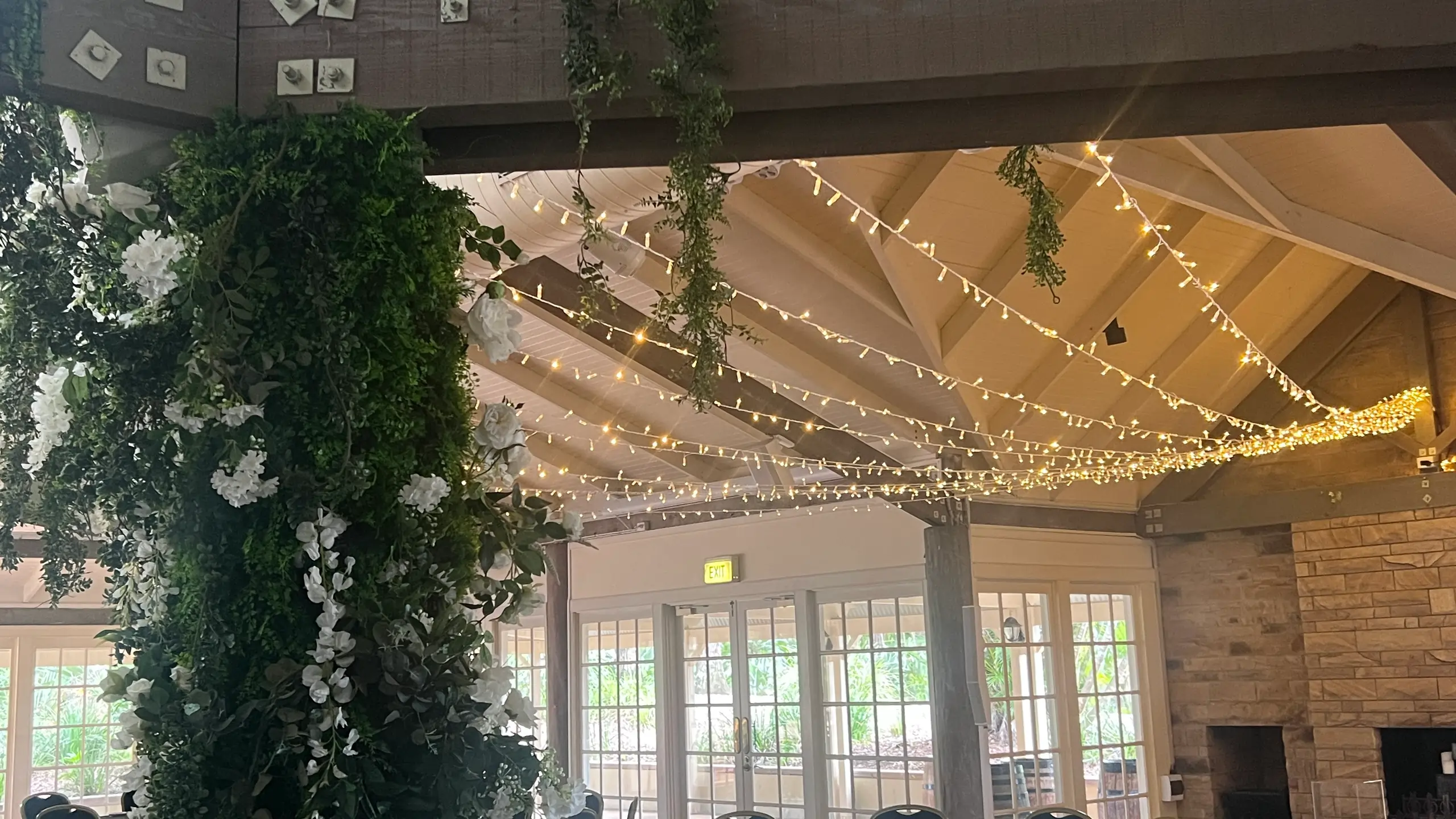
A marquee is the classic wet weather answer, and lit well it's arguably better than the open-air original — a ceiling made of light feels intentional, not like a backup plan. But marquee lighting has its own rules, and they matter more in bad weather, not less.
The big one: marquee frames and gutters are not rigging points for anything heavy, and every marquee supplier has a story about a DIY installation that found this out. We rig within the structure's rated capacity, coordinate directly with your marquee company, and design so the lighting loads the frame where it's engineered to take load. A fairy light canopy across the ceiling, warm festoon along the perimeter, and uplighting on the peaks is the combination that consistently transforms a white plastic box into the best room your guests have stood in.
The other rule is sequencing. In a proper contingency plan, the marquee lighting is designed at the same time as the outdoor lighting, not improvised after the weather call. When we quote a marquee wedding, the wet weather configuration is part of the design conversation from the first email — which is exactly why the weather call itself stops being scary.
Two practical details worth knowing for marquee events in this climate. Clear-roof marquees look spectacular under lighting but run hot until sunset in summer, so we design lighting that earns its keep after dark rather than fighting the afternoon glare. And warm bodies plus summer humidity means condensation — another reason every connection inside a marquee gets the same weather-protected treatment as one in the open, even though it's nominally under cover. Small things, but they're the difference between a marquee that feels engineered and one that feels improvised.
Safe vs Not
What's safe in the wet, and what isn't
A plain-English summary you can sanity-check any event against. Safe in wet weather:
- IP65-rated lighting professionally installed with weather-protected connections — our festoon runs through rain without a flicker.
- Elevated, protected cabling on outdoor-rated leads, with joins kept off the ground and clear of pooling water.
- LED fixtures generally, which run cool and at low wattage — a 60 metre festoon run draws about 240 watts.
Not safe, and worth being direct about:
- Indoor-rated lights or leads outdoors, in any weather forecast. Damp coastal air is enough to make IP20 gear a hazard.
- Connections lying on grass or paving where water pools — the most common real-world failure we see.
- Untested second-hand gear: if it hasn't been tested and tagged, its condition is a guess.
- Anything rigged to unrated structure once wind enters the forecast.
One more for the safe list, since it surprises people: wet bulbs are fine to leave on. IP65 festoon is designed to run through rain, and switching a sealed LED system off in a shower achieves nothing except a darker event.
If an existing setup at your venue makes you uneasy, trust the instinct and ask questions. The full detail on how we keep installs safe is on our safety and compliance page.
Peace of Mind
Test and tag, insurance, and what we carry
There's a paperwork side to wet weather planning, and it's worth two minutes because venues increasingly insist on it. Every fixture, lead and connection we hire out is tested and tagged — an electrical safety check with a dated tag proving the item has been inspected. Most established venues won't let external electrical equipment on site without it, and after storms it's the difference between an insurer conversation that's routine and one that isn't. If a supplier can't show you current tags, that tells you what their gear has been through between events.
The practical takeaway from this whole guide is simpler than it might seem: wet weather is a planning input, not an emergency. Gear rated for the conditions, rigging that respects the wind, connections kept dry and elevated, a marquee plan designed early, and paperwork in order. That's the whole recipe, and when it's done right your guests never think about the weather at all — they just remember how the place looked.
Planning an outdoor event between Brisbane and Byron Bay? Tell us the site and the date — wet season or not — and we'll design for the conditions from the first draft. Festoon packages start from $895 including delivery, install and packdown, and quotes come back within 24 hours. You can also browse the full outdoor-rated range first.
How it works
01
Get a quote
Tell us about your event and venue — we come back with options and a price within 24 hours.
02
Design & plan
We spec the right gear for your space, with renders for bigger builds so you see it before the night.
03
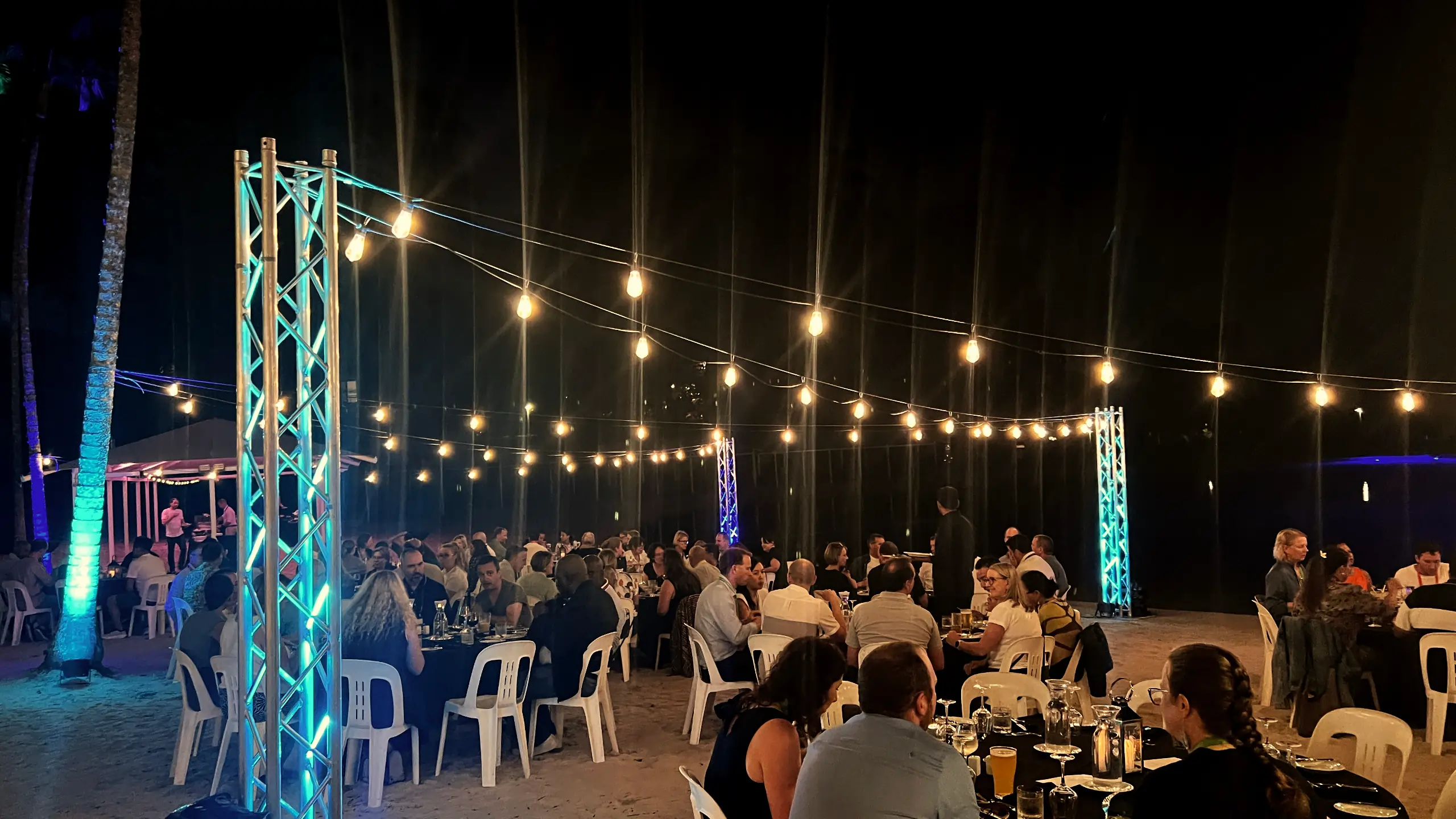
Delivery & install
Our crew delivers, rigs and tests everything — you never touch a ladder.
04
Enjoy & packdown
Enjoy the night. When it wraps, we come back and pack it all down.
Frequently asked
Yes. Our festoon is rated IP65, which means it's fully sealed against dust and protected against water jets from any direction — steady rain is well within its design. The install matters as much as the rating though: connections need to be weather-protected and kept off the ground, which is standard on every outdoor job we do.
IP stands for Ingress Protection and the two digits score dust and water resistance. The 6 means completely sealed against dust; the 5 means protected against water jets from any direction. In practice, IP65 lighting handles rain, sea spray and hosing down. By contrast, typical indoor party lights are IP20 — no water protection at all.
The lighting itself keeps running — IP65 gear is built for rain. Wind is the factor we actively manage: longer spans are rigged on tensioned catenary wire from rated anchor points, so the install carries wind load safely. In a severe warning we'll liaise with you and the venue on timing, but rain alone has never stopped one of our installs.
No — November to March is peak event season here for good reason. The key is planning for the conditions: lock in a marquee or indoor contingency early, keep the lighting design flexible enough to work in both, and remember that summer storms in this region are mostly a mid-to-late afternoon event. Evening receptions often sit behind the front in beautiful clear air.
Yes, and it's some of our favourite work — fairy light canopies, perimeter festoon and peak uplighting turn a plain marquee into the best room at the venue. The critical part is rigging within the frame's rated capacity and coordinating with your marquee supplier, because marquee gutters and frames aren't built to carry casual DIY loads.
Not the lights — the connections. Indoor-rated extension leads and power boards left on wet grass or in pooling water fail long before quality fixtures do. Professional installs use outdoor-rated cabling with weather-protected joins kept elevated and clear of water paths, which removes the failure point almost entirely.
Every item, every time — fixtures, leads and connections all carry current test tags. Most established venues require this before external electrical equipment comes on site, and it matters for insurance if weather ever does cause an incident. If you're comparing suppliers, asking to see current tags is a fair and revealing question.
Decide the plan months out; make the call as late as your venue and suppliers genuinely allow. Because we design the contingency lighting alongside the original, switching locations is a logistics step rather than a redesign. A typical install takes 2 to 3 hours, so with a locked-in plan B, even a morning-of call is workable.
Keep reading
More event lighting guides
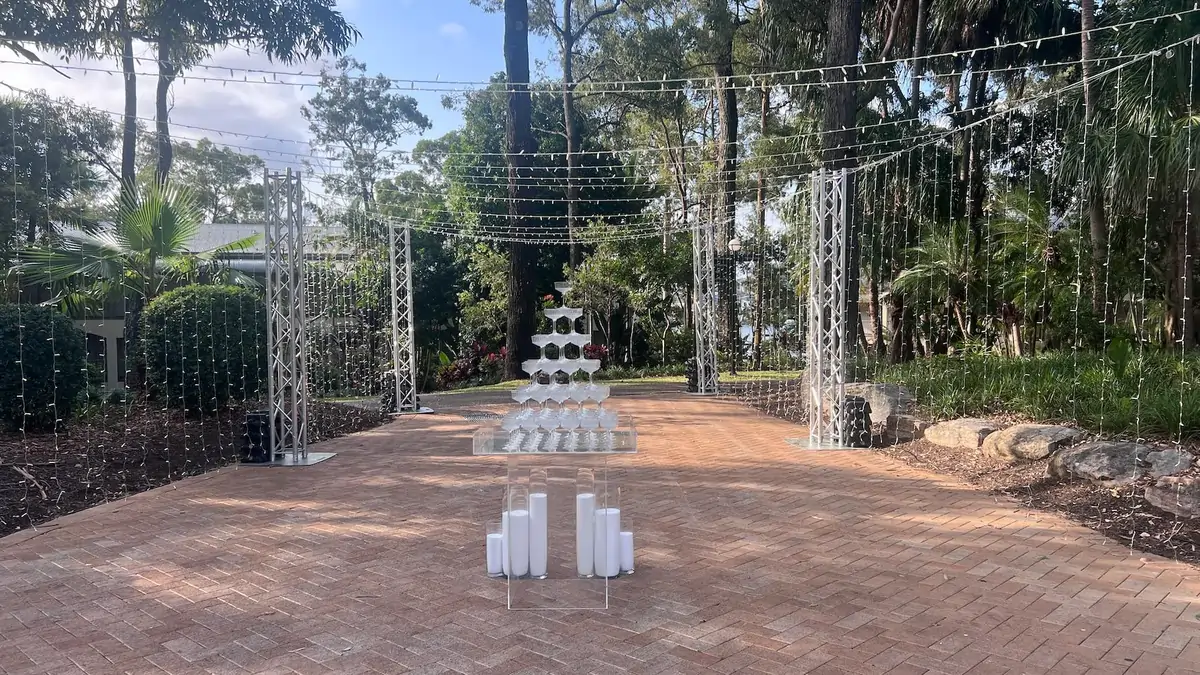
Byron Bay Hinterland Wedding Lighting Guide
Byron Bay hinterland wedding lighting guide covering barns, tipis and paddock venues — power, rigging and sunset timing…
Read more →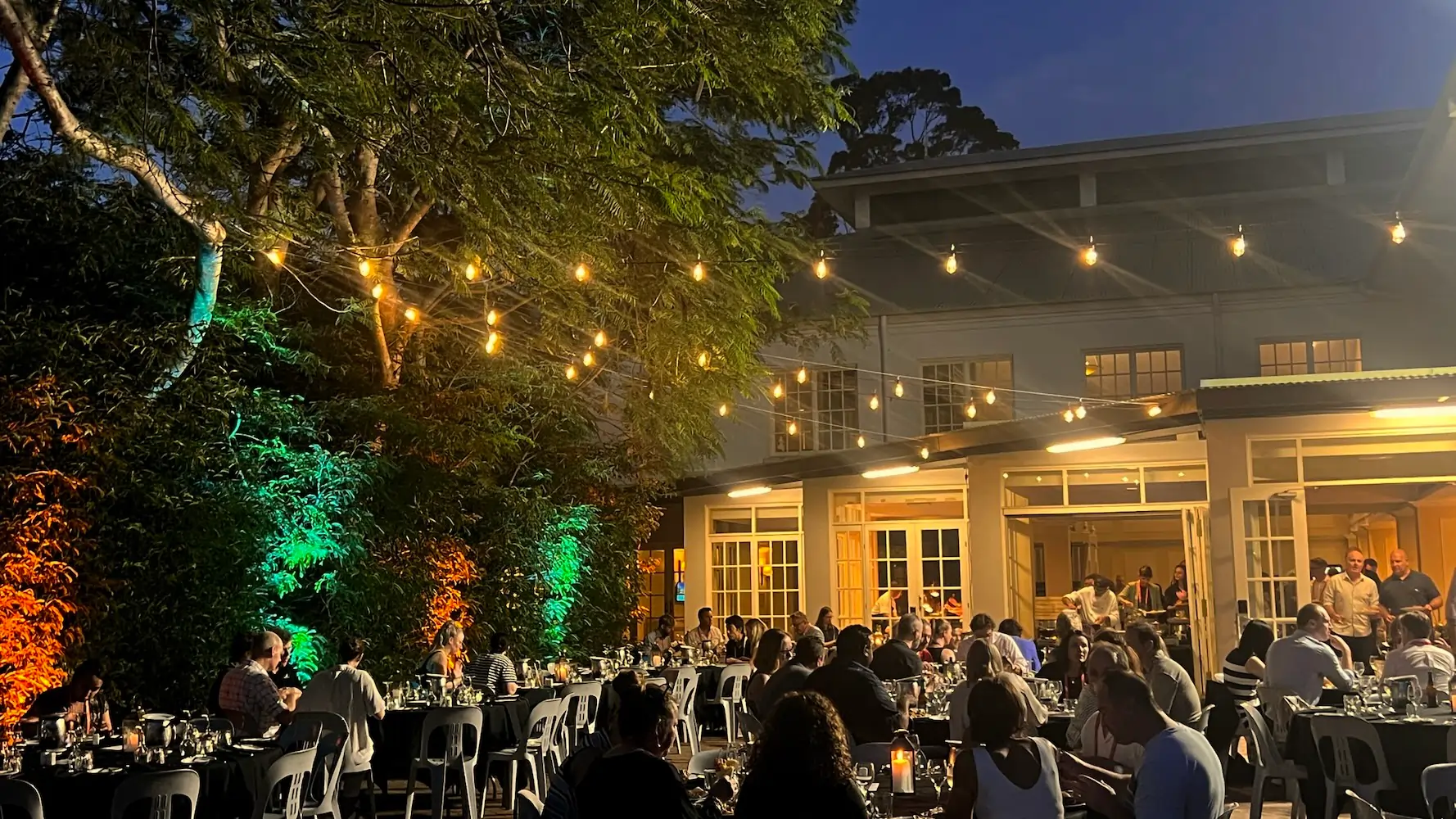
Choosing Event Lighting on the Gold Coast
How to choose event lighting hire on the Gold Coast — venues, coastal weather and what to ask suppliers — from a crew wi…
Read more →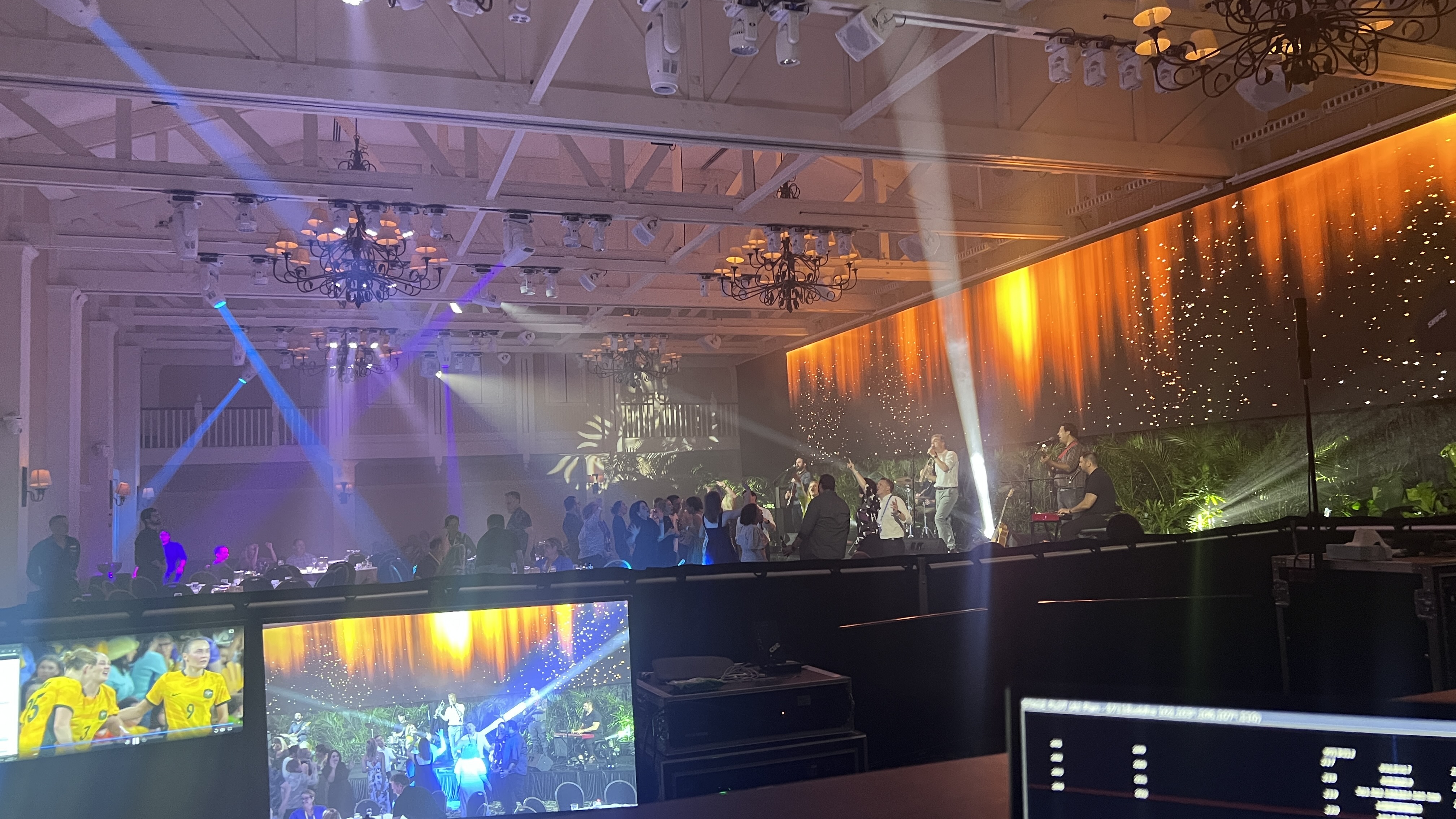
Corporate Event Lighting Guide
How to plan lighting for galas, conferences and launches — branding, stage wash and AV — from a crew with 10+ years ligh…
Read more →Dance Floor Lighting Ideas
Dance floor lighting ideas for weddings and events — canopies, colour, DMX moments and lasers — from the crew that light…
Read more →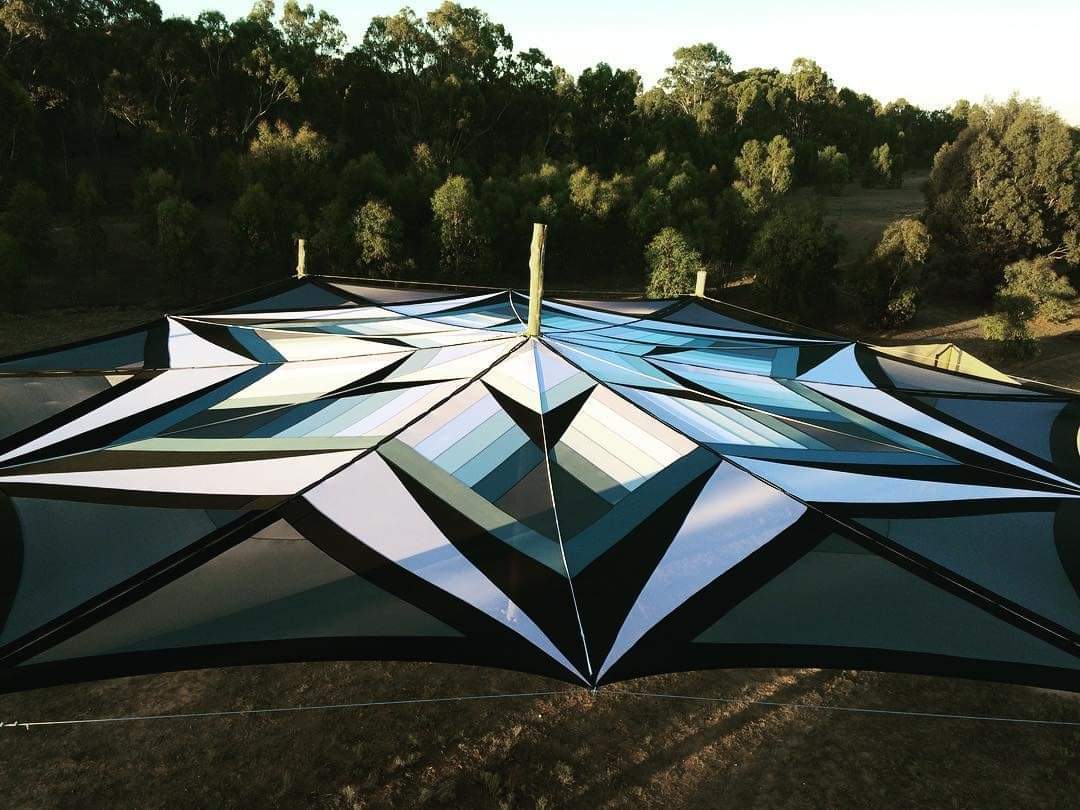
The Event Lighting Checklist
The checklist we run before every install — venue, power, weather, timing and safety — so your event lighting goes right…
Read more →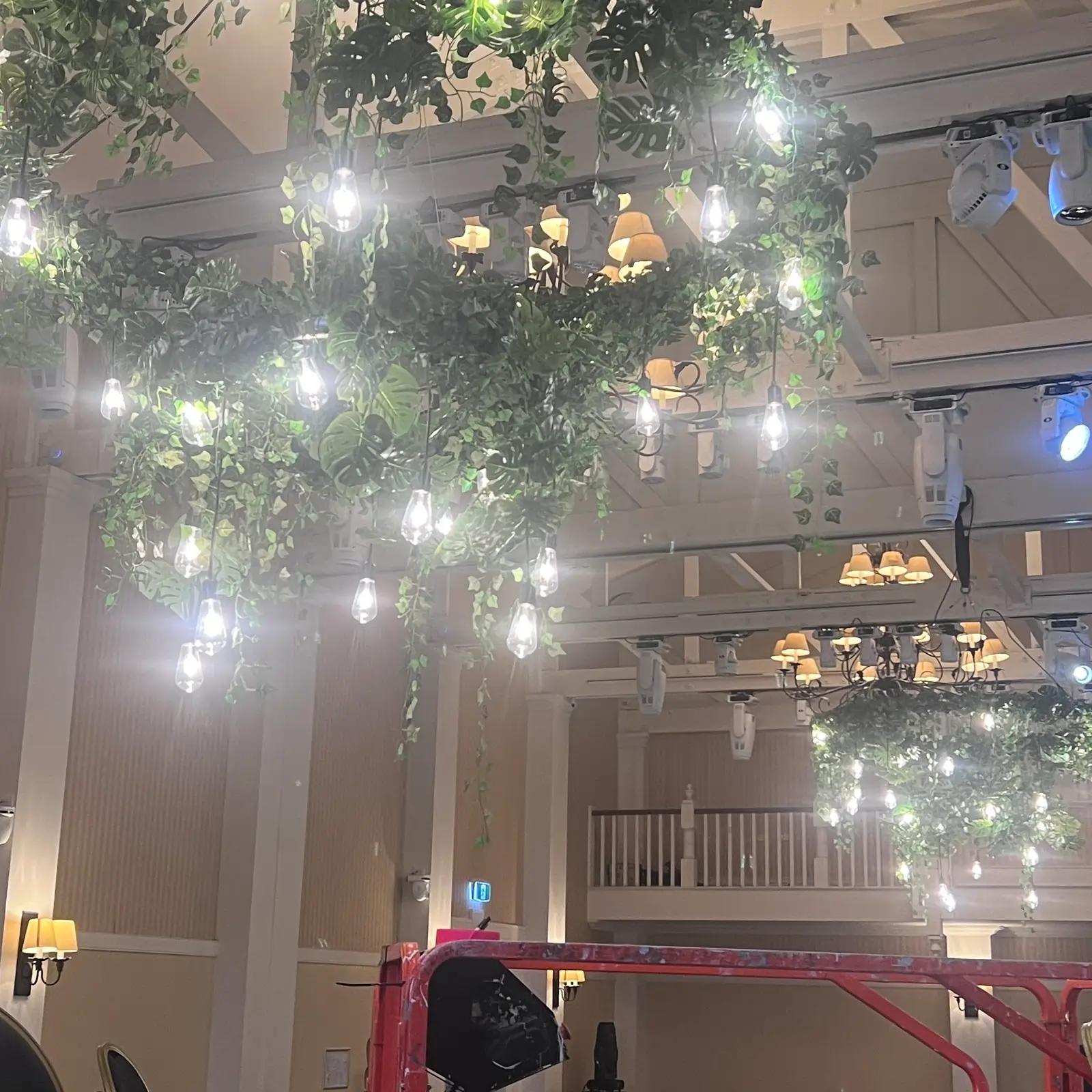
Event Lighting: Hire vs Buying — The Honest Maths
Event lighting hire vs buying compared honestly — real costs of owning 60m of festoon, when buying makes sense, and what…
Read more →
Festival Lighting Explained
How festival lighting works — stage rigs, DMX programming, lasers and site lighting — explained by operators with 10+ ye…
Read more →
How Professional Festoon Lighting Installation Works
Festoon lighting installation explained — site visits, catenary wire rigging, spans and sag, power planning and why pros…
Read more →
Festoon vs Fairy Lights: Which Should You Hire?
Festoon or fairy lights? How the two compare on look, coverage and cost — and when to combine them — from installers wit…
Read more →
Gala Dinner & Awards Night Lighting Guide
Gala dinner and awards night lighting guide — room wash, branded uplighting, gobo logo projection, stage lighting and AV…
Read more →How Much Does Event Lighting Cost?
What event lighting hire really costs — festoon, uplighting, stage rigs and projection — and what drives the price. Hone…
Read more →How to Light a Wedding Reception
Step-by-step guide to lighting a wedding reception — zones, layers and timing — from installers who've lit hundreds of r…
Read more →LED Uplighting vs Festoon Lighting: What's the Difference?
LED uplighting vs festoon lighting compared — what each does, what each costs and how to combine them — from installers…
Read more →Marquee Lighting Guide
How to light a marquee properly — canopies, pole wraps, uplighting and dance floors — from installers who rig marquees w…
Read more →Outdoor Wedding Lighting Tips
Practical outdoor wedding lighting tips — weatherproofing, power, trees and timing — from installers who light coastal w…
Read more →Projection Mapping Explained
What projection mapping is, how it works and what it costs — buildings, stages and reveals — explained by technicians wh…
Read more →Uplighting Colour Guide: Choosing the Right Palette
How to choose uplighting colours for weddings, galas and events — warm vs cool, brand colours, and the shades that flatt…
Read more →Venue Power for Event Lighting: What You Actually Need
Venue power for event lighting explained — 10A vs 15A circuits, real wattage numbers, when you need a generator, and the…
Read more →The Complete Wedding Lighting Guide
Plan your wedding lighting — ceremony, reception and dance floor — with a crew that's lit weddings across QLD and NSW fo…
Read more →Get a lighting quote in 24 hours.
Tell us about your event — we'll come back with options and a price.